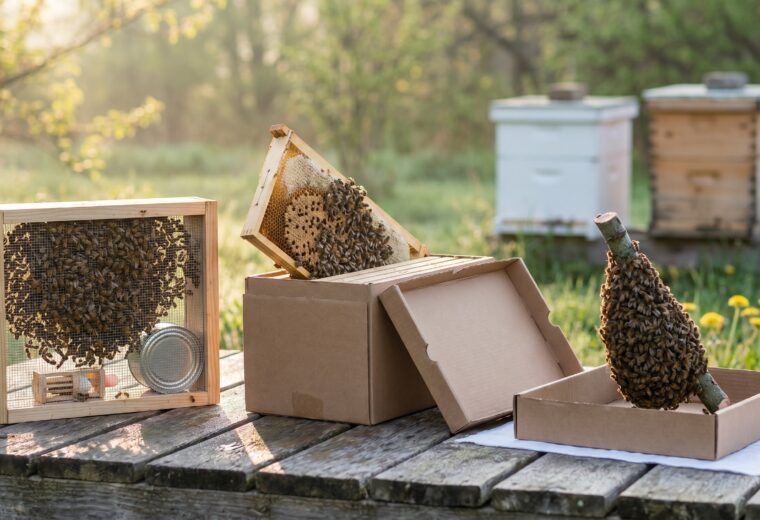
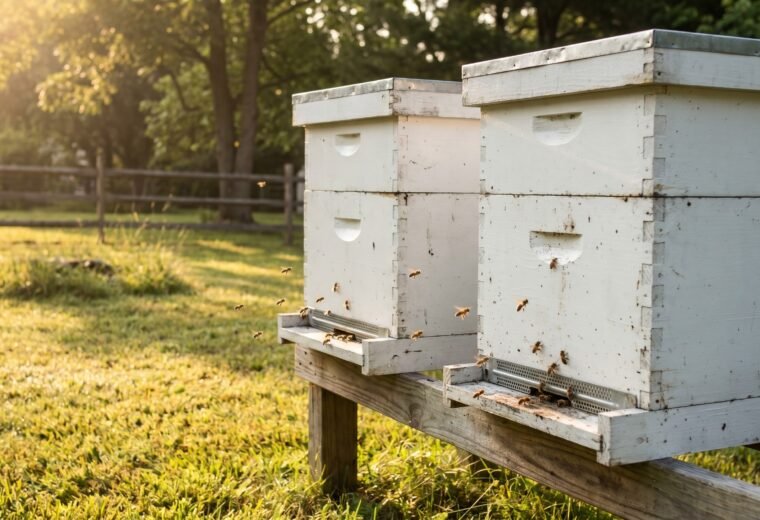
Package vs nuc: which one fails less in your first year of beekeeping
A head-to-head on price, head start, winter survival, and install, with an honest pick for first-year beekeepers and a side-by-side decision table.
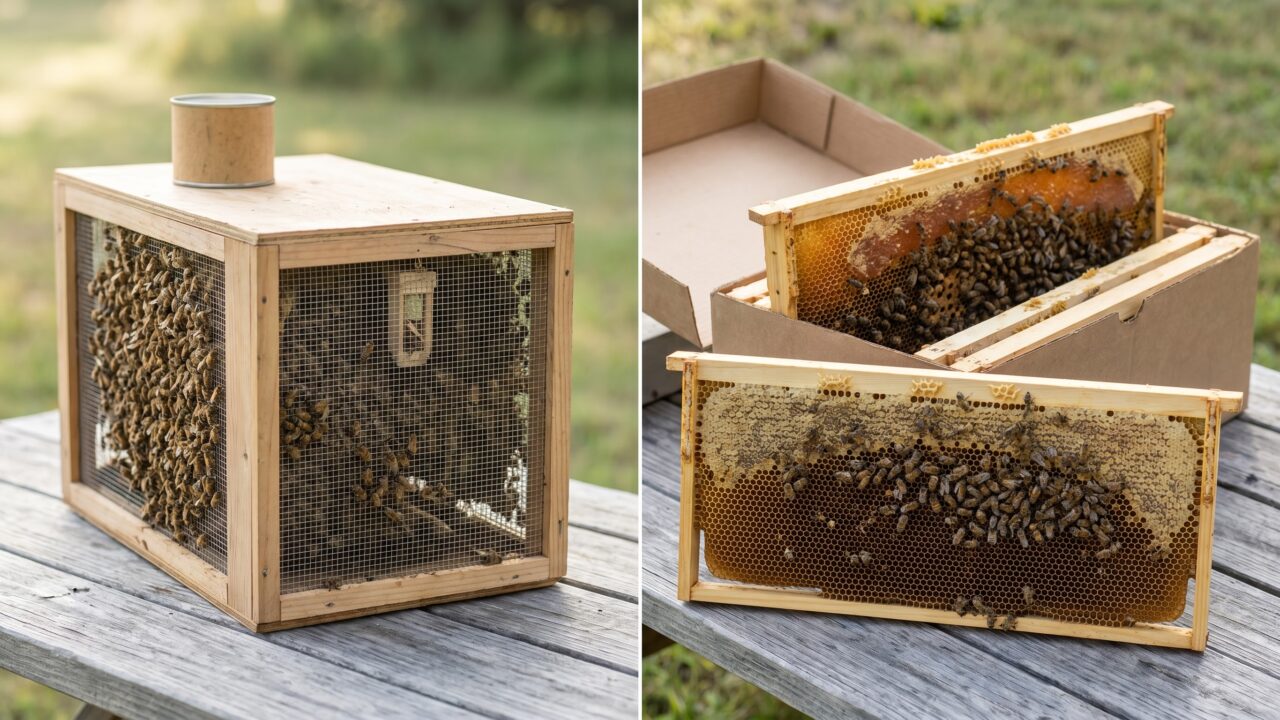
If you want the better odds of a living colony next spring, a nuc usually fails less than a package in a first year. A nuc arrives as a small working hive: drawn comb, brood in every stage, food on the frames, and a queen the bees already accept. A package is loose bees and a caged queen starting on bare foundation, so it spends weeks just building the house before it can grow. That head start is real. It also costs more, sells out faster, and you have to drive to get it.
Neither choice is a mistake. The right call depends on what is actually for sale near you in winter, what you can spend, and how much margin you want before your first cold season. Let's put them side by side on the things that decide a first year.
What you are actually buying
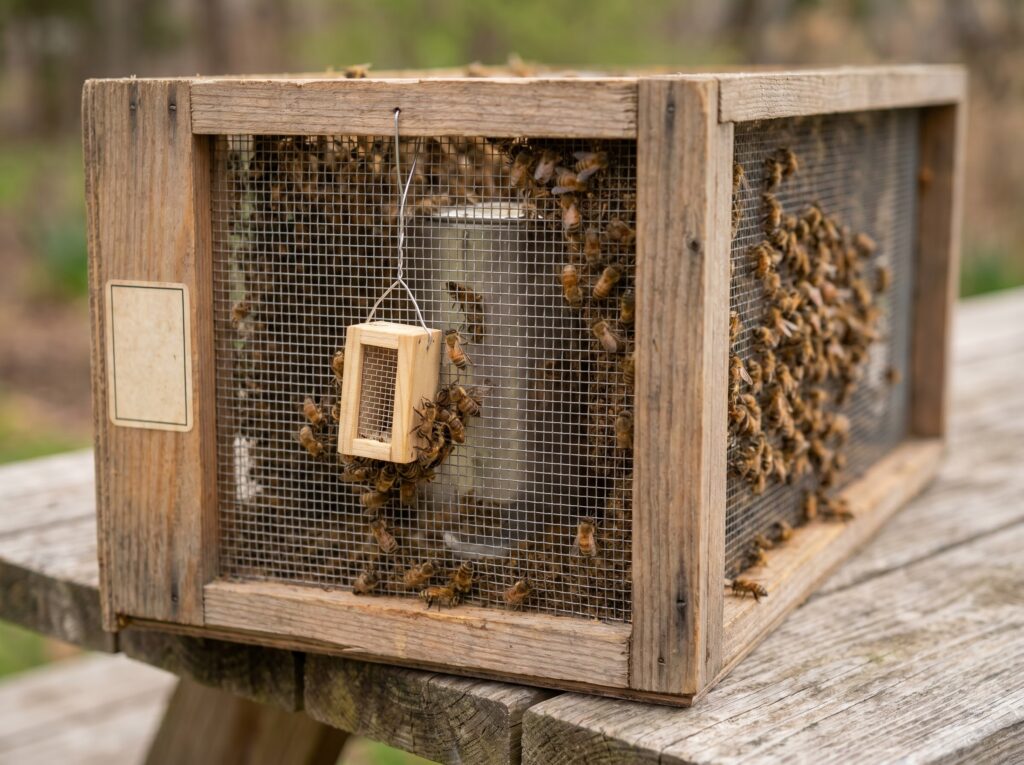
These two products look similar on an order page and behave very differently in the box.
A package, per UF/IFAS Extension, is "a screen box that typically comes with three (3) pounds of honey bees and a mated queen." The queen rides in a small cage because she is not yet the bees' own queen; they have to release and accept her over a few days. There is no comb, no brood, and no stored food. Everything starts at zero.
A nuc, in the same source, is "a small, establishing colony that typically consists of five (5) Langstroth-sized frames, including 2-4 frames of brood, and a mated queen." The queen is laying, her workers are loyal to her, and the frames already hold eggs, larvae, capped brood, pollen, and honey. You are buying a colony in miniature, not the parts to make one. If the words feel slippery, our plain-language take on what a nuc is and what comes in the box walks through each frame.
Price, head start, winter survival, install: the head-to-head
Here is the comparison laid out on the four things that move the needle in year one, with our read on who wins each row.
| Factor | Package (about 3 lb + caged queen) | Nuc (5 frames, laying queen) | Edge |
|---|---|---|---|
| Price | About $140 to $200 for a 3 lb package | About $180 to $300 for a 5-frame nuc | Package |
| Head start | Starts at zero comb; "starting with nothing," slower to build up (UF/IFAS) | Drawn comb plus brood; "already producing young and growing" (UF/IFAS) | Nuc |
| Winter survival odds | Less buildup time means less time to store the roughly 60 to 90 lb needed (90 lb North, UF/IFAS; ~60 lb South, Mississippi State) | More frames of bees and brood going into fall | Nuc |
| Pest cleanliness | "Usually completely free of Varroa mites," no old comb (UF/IFAS) | Some risk of "mites...in brood cells" and disease in older comb (UF/IFAS) | Package |
| Feeding load | Needs feeding "more, and for a longer period" to draw comb (UF/IFAS) | Has comb and stores, "without extensive feeding" (UF/IFAS) | Nuc |
| Availability and pickup | Can ship by mail; orders open early and sell out | Local pickup only; "coordinate in-person pick up" (UF/IFAS) | Package |
| Install difficulty | Shake bees in, release the queen cage; more dramatic, more risk of a bad start | Lift 5 frames across; closest thing to a non-event | Nuc |
Read the edge column and a pattern shows up. The package wins on money and on starting clean of varroa. The nuc wins on everything that touches survival: buildup, brood on day one, less feeding pressure, and an install that is hard to botch. For a first-year keeper whose real goal is a colony that is still alive in March, the survival column carries more weight than the price column.
What the prices really run
The sticker numbers below come from a current university source, and the wider street ranges reflect shipping, fuel surcharges, and the plain fact that good local bees sell out.
- Package: a three-pound package with a queen runs about $140 to $200 in much of the country once shipping and spring demand are counted. NC State Extension's older sticker figure of "$100-125" sits at the low end of that.
- Nuc: a five-frame nuc runs about $180 to $300, with the top of that range normal from a sought-after local breeder. NC State lists a base "$150-200," which holds up only in cheaper regions.
- A caught swarm: free, if you are set up to grab one. Our note on getting bees for nothing from a swarm covers the catch, though no one schedules a swarm.
Hold that against the rest of the first-year bill. A complete Langstroth starter kit runs about $200 to $400, before you add a suit, smoker, hive tool, a mite-test kit, sugar for feed, and a first season of mite treatment. Most beginners land somewhere between $750 and $1,500 all in for one hive their first year. The roughly $40 to $100 you save going package instead of nuc is real, but it is a small slice of that total. Where the bees come from is laid out in our overview of how to buy bees and what each option costs.
Why a colony fails in year one, and which start helps
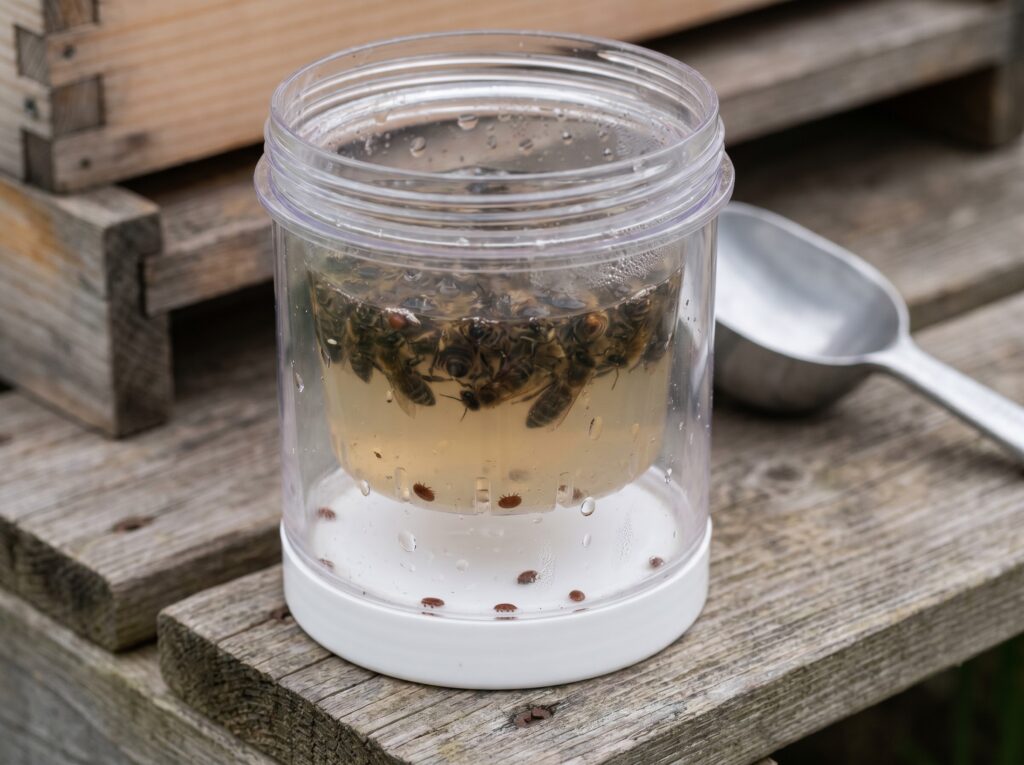
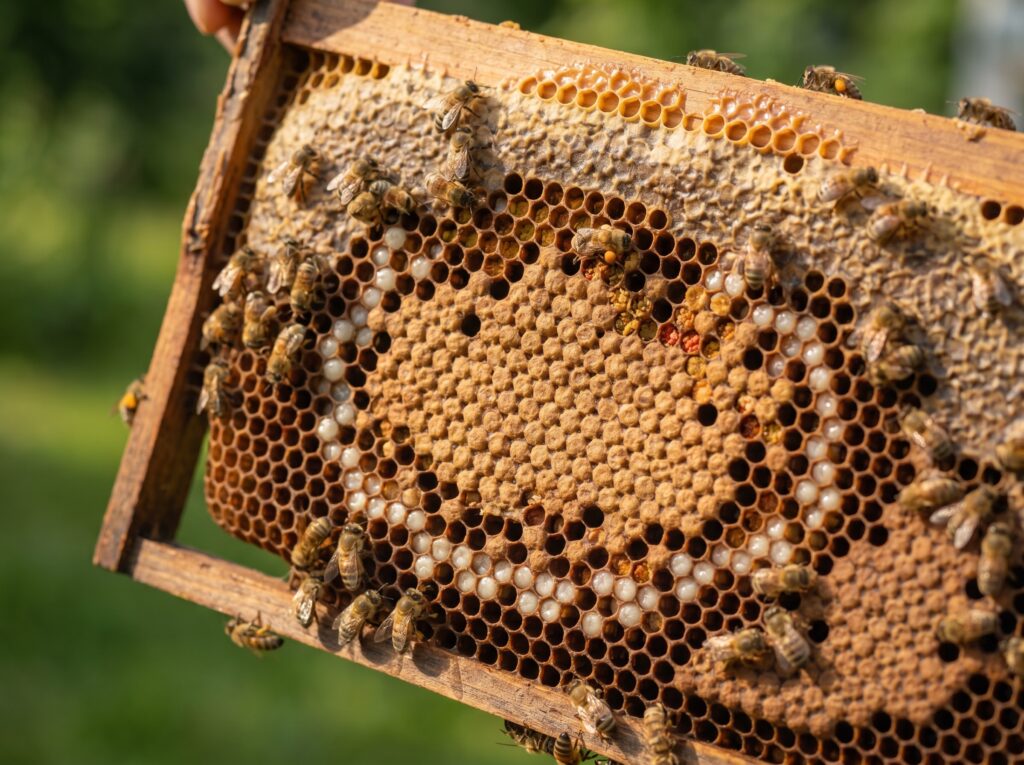
Most first-year deaths are not bad luck. They trace to a short list of causes, mainly mites, starvation, and moisture, and the package-versus-nuc choice quietly nudges the first two.
Start with the numbers, because they are sobering. The 2024-2025 US Beekeeping Survey from the Apiary Inspectors of America found "beekeepers in the United States lost an estimated 55.6%" of their colonies, with backyard keepers at "51.4%," against a "running 14-year average annual loss rate of 41.4%." More than four in ten colonies die in an average year. That is the backdrop for any honest comparison, and it means replacing a dead-out is a recurring cost you should expect, not a one-time surprise.
Varroa mites are the engine behind much of that loss. The mite spreads viruses and shortens the lives of the very bees a colony needs for winter, so UF/IFAS notes that varroa "weaken colonies in late summer" right when winter bees are being reared. Monitoring is simple. You collect a roughly 300-bee sample, a half-cup scoop, and do an alcohol wash. The Honey Bee Health Coalition puts the late-summer action line at about 2 mites per 100 bees, a 2% infestation, and the goal is to treat before the winter bees are reared. This is where a package looks deceptively safe. It starts varroa-free, which is a real edge, but the clean slate does not last. Mites arrive on drifting bees within weeks, so a package buyer still has to monitor and treat on the same schedule as everyone else. A cleaner start is all the head start buys; it is no free pass. How and when to act lives in our piece on buying and starting a package the right way.
The second killer is starvation, often paired with moisture. UF/IFAS calls lack of food "one of the leading causes of colony death during the winter" and says a northern colony should carry "about 90 pounds of honey reserves," with southern colonies needing less, closer to 60 pounds by Mississippi State Extension figures. Bees do not hibernate; they cluster around the queen and eat through stores all winter. A nuc, already on comb with brood, has more time to build up and pack away those stores before fall. A package spends its first weeks just drawing comb, so it has fewer weeks left to grow and store. That is the clearest way a nuc fails less: more runway to reach winter weight.
Install day: where a first start goes wrong
The single most common beginner stumble is the package install, specifically the queen. Done right, both starts are manageable. Done wrong, a package can be queenless before week two.
Installing a package means shaking three pounds of loose bees into an empty box and setting the queen cage so the colony releases her over a few days. Open the cage too early and she can be killed; never check and she may never get out. New keepers also panic during the shake, set the cage upside down, or remove the cork on the wrong end. None of it is hard once you have seen it, but it is the riskiest few minutes of a package's life. The step-by-step for the day the box arrives is in our guide to installing a package without losing the queen.
A nuc install is gentler. You lift five frames of established comb, bees, and brood straight into your box in the same order, close up, and feed. The queen is already loose, already laying, already accepted, so the highest-risk moment of a package start simply does not happen. For a first-timer who has never opened a hive, that calmer first hour is worth a lot. It is the closest thing in beekeeping to a colony that installs itself.
So which should a first-year keeper buy?
For most first-year keepers, buy a nuc if you can get a clean one locally. It fails less because it skips the slowest, riskiest part of the package start: weeks of comb-building and a fragile queen release. You go into your first fall with more bees, more brood, and a better shot at winter stores. Pay the extra $40 to $100 and treat it as cheap insurance on a $750-plus first year.
Buy a package instead when no local nuc is available, when your budget is genuinely tight, or when you specifically want to start clean of varroa and old comb. Just plan to feed it harder and longer, and watch the queen cage closely. One more honest nudge for a first year: starting two colonies, not one, is the strongest hedge against a single dead-out, since a healthy hive can rescue a failing one with a frame of brood. We make that case in why two hives beat one for a beginner. Whichever you pick, the goal in year one is the same. It is not honey. It is a colony that is still flying when the crocus blooms.
Questions answered
Is a nuc really worth the extra money for a beginner?
For most first-year keepers, yes. The roughly $40 to $100 premium buys drawn comb, brood, and an already-accepted queen, which means more buildup time before winter and a gentler install. Against a $750 to $1,500 first-year total, it is a small price for better survival odds.
Will a package catch up to a nuc?
Often by mid to late summer a strong package draws comb and builds up well. The gap matters most early. A nuc reaches winter weight with more margin, while a package spends its first weeks building comb instead of storing food, leaving fewer weeks to prepare for cold.
Are package bees safer because they start without varroa?
They start cleaner, which UF/IFAS confirms, but not permanently. Mites arrive on drifting bees within weeks. Both starts need varroa monitoring with an alcohol wash and treatment at about 2 mites per 100 bees, per the Honey Bee Health Coalition. The clean slate is a head start, not protection.
Can I just catch a swarm instead?
You can, and it is free, but you cannot schedule it. Swarms also vary in size, health, and temperament, and may carry mites. A swarm is a fine bonus colony once you have a hive ready, not a reliable plan for guaranteeing bees on a date you choose.
- UF/IFAS Extension, "Starting New Honey Bee Colonies: Packages vs. Nucs"used for what each is, head start, feeding, varroa and disease risk, and pickup
- NC State Extension, "How to Become a Beekeeper in North Carolina"used for package, nuc, and starter-kit prices and shipped-vs-local pickup
- Apiary Inspectors of America / Auburn University, 2024-2025 US Beekeeping Surveyused for annual and backyard colony loss rates and the 14-year average
- Honey Bee Health Coalition, "Tools for Varroa Management"used for the late-summer action threshold of about 2 mites per 100 bees and treating before winter bees
- LSU AgCenter, "Performing an alcohol wash to determine Varroa mite populations"used for the roughly 300-bee half-cup sample method
- UF/IFAS Extension, "Overwintering Honey Bee Colonies in Northern Climates"used for northern winter stores, causes of winter death, and clustering
- Mississippi State University Extension (Pub. 2941), "Colony Growth and Seasonal Management of Honey Bees"used for the lower southern overwintering store figure (60 to 65 pounds above the cluster)
- UGA CAES, "A beginner's guide to successful beekeeping"used for the year-one goal being survival, not honey