Varroa mite thresholds: when to treat, by season
Learn the exact varroa treatment threshold for each season - spring, summer, late summer, and fall - with a step-by-step mite-count calculator based on USDA and extension guidance.
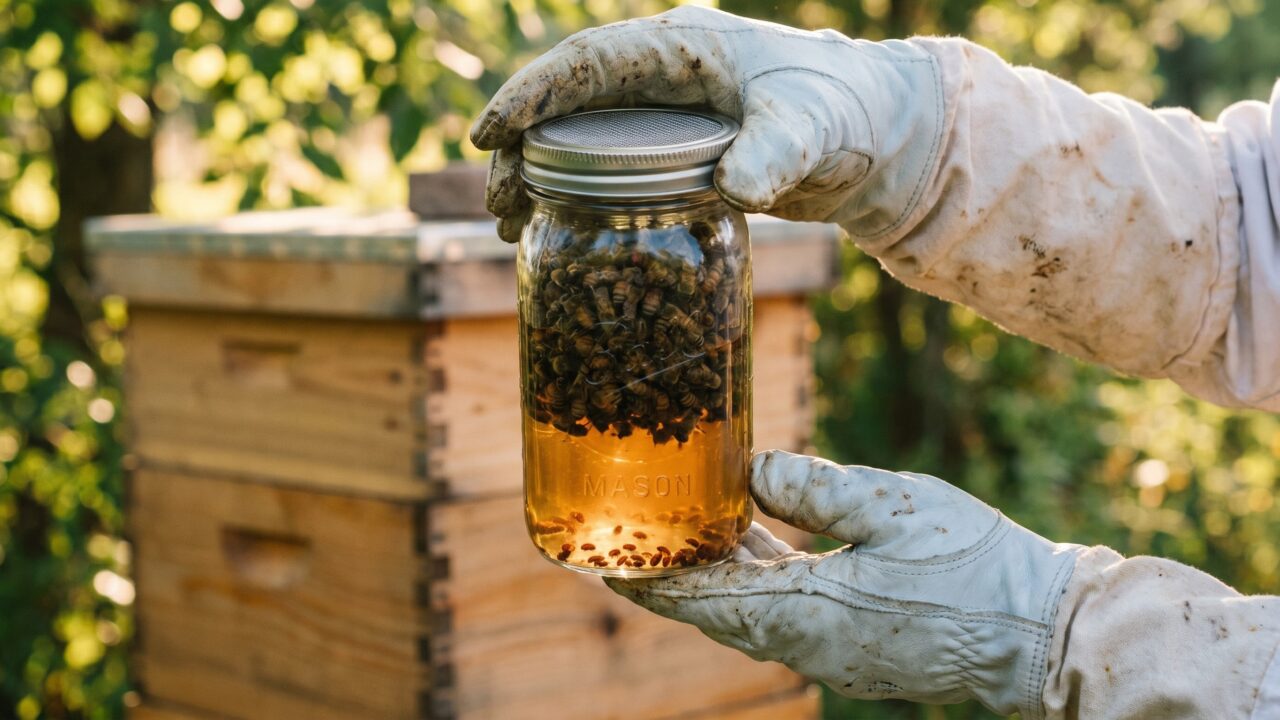
Three mites counted in a 100-bee sample is the number most US extension programs use as the general action threshold for varroa treatment. That figure alone, however, misses half the picture. The threshold that matters in late July is not the same threshold that matters in February - and the difference between getting it right and getting it wrong is often the difference between a living hive in April and a dead one.
What follows is a season-by-season breakdown of what counts mean action, the arithmetic behind the numbers, and the one window every backyard beekeeper needs to defend above all others.
Why the threshold changes by season
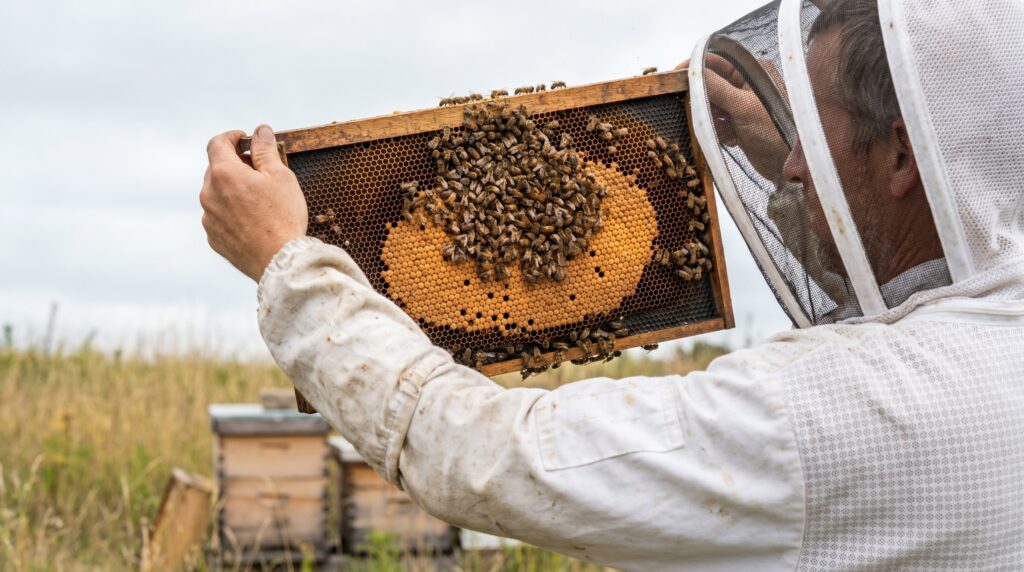
Varroa pressure on a colony is not static. The mite population grows exponentially through spring and summer, riding a wave of sealed brood. A load of 2% in May is bad; 2% in August is a crisis, because the workers developing in those cells right now will be responsible for carrying the colony through five or six months of cold. Penn State Extension puts it plainly: "controlling mites in the fall is a major factor linked to overwintering survival in honey bee colonies."
The workers that hatch from August through September are physiologically different from summer bees. They carry larger fat bodies - specialized abdominal organs that store the protein and lipid reserves that fuel the winter cluster. Penn State's seasonal management guidance describes them this way: "A healthy population of winter bees is essential to colony winter survival. If these bees are unhealthy or diseased, they will die during the winter when the colony is unable to rear new bees to replace them, resulting in a winter cluster that is too small to survive until spring."
A mite feeding on a pupa in late July does not just extract hemolymph. It transmits deformed wing virus and other pathogens that shorten adult lifespan from the roughly six weeks of a summer worker to as little as two or three weeks - not enough time to survive until the first spring brood. A peer-reviewed study tracking colony outcomes across two winters found that "low V. destructor infestation levels before and during the transition to winter bees resulted in an increase in lifespan of bees and higher colony survival." In the same study, four colonies were lost in the untreated group over the first winter, while no colonies were lost in the treated groups.
So the threshold number shifts not because mites are less dangerous in spring - they are always dangerous - but because the cost of a high load at the wrong moment is irreversible. You can correct a June mite problem and still salvage the season. You cannot undo the damage to bees that have already emerged and will not be replaced until March.
The seasonal threshold table
The numbers below draw on guidance from the USDA's Carl Hayden Bee Research Center, Mississippi State University Extension, the University of Minnesota Bee Lab, NC State Extension, and Penn State Extension. Small disagreements exist between programs (some list 2%, some 3% as the summer trigger), so the table shows the range and the conservative recommendation where sources diverge. Use the most protective figure when in doubt.
| Season / window | Approximate dates (northern US) | Action threshold (mites per 100 bees) | Raw count in a 300-bee sample | Why this number |
|---|---|---|---|---|
| Late winter / early spring | Feb - early Mar | 1% (1 mite per 100) | 3 or more mites | Colony is small; mite load compounds fast as brood ramps up. MSU Extension sets the February trigger at 1%. |
| Spring buildup | Mar - May | 2-3% (2-3 mites per 100) | 6-9 or more mites | NC State Extension: treat when levels reach 2-3 per 100 before honey flow. Treat before supers go on. |
| Honey flow | May - July (region-dependent) | Monitor monthly; treat if above 2% | 6 or more mites | U of Minnesota Bee Lab threshold. Treatment options limited by super presence; choose supers-on-approved products. |
| Late summer knockdown (critical) | Late Jul - mid-Aug | 2% or lower; treat even at 1-2% if winter bees are imminent | 3-6 mites | MSU Extension: July is the second key sample date. Mites present now damage winter bees. This is the most consequential window of the year. |
| Early fall | Aug - Sep | 2% (treat at 2 per 100); Honey Bee Health Coalition current guidance | 6 or more mites | HBHC sets fall threshold at 2 per 100 (updated from the older 3% figure). Sample every 3 weeks. Goal: mite load as low as possible before cluster forms. |
| Broodless window / late fall | Oct - Dec (after cluster) | Any detectable load warrants treatment | 1+ mites | No brood means oxalic acid vaporization reaches nearly every mite. This is the most efficient time for a clean-up treatment. |
The year-round aspirational goal, per the University of Minnesota Bee Lab, is to "keep varroa levels below 1% year round (0 to 2 varroa in a 300 bee sample)." Most colonies will drift above that ceiling at some point in summer; the table above tells you when drifting turns into an emergency.
How to calculate your own threshold count
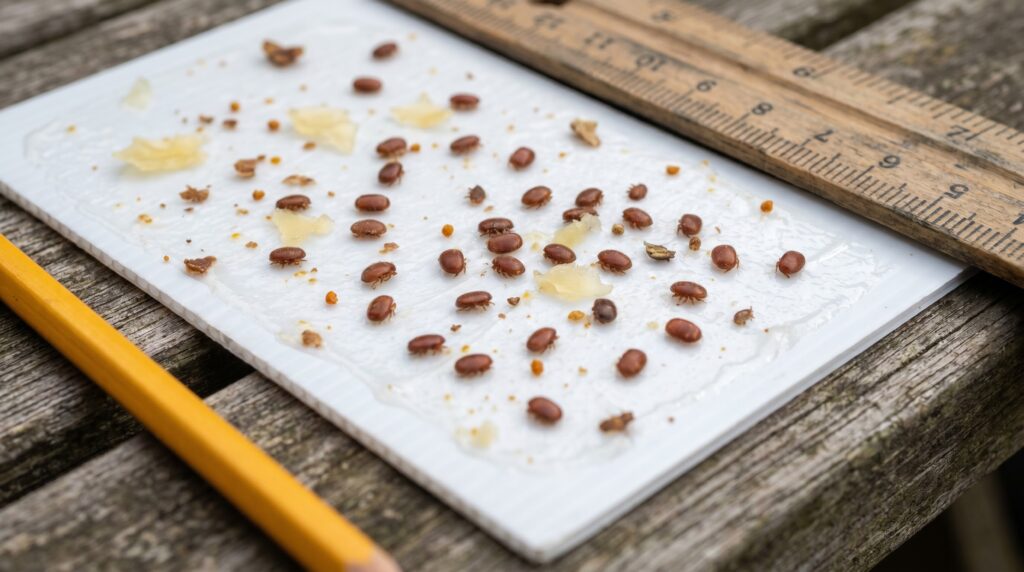
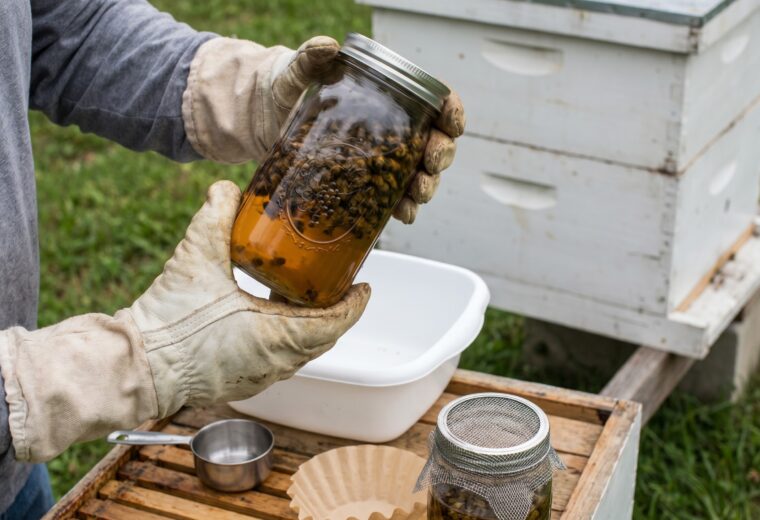
The arithmetic is simple enough to do on your phone before you close up the hive. The standard sample for an alcohol wash is about 300 bees - roughly half a cup scooped from a frame of capped brood where nurse bees are concentrated. That sample represents the mite load on adult bees in the hive.
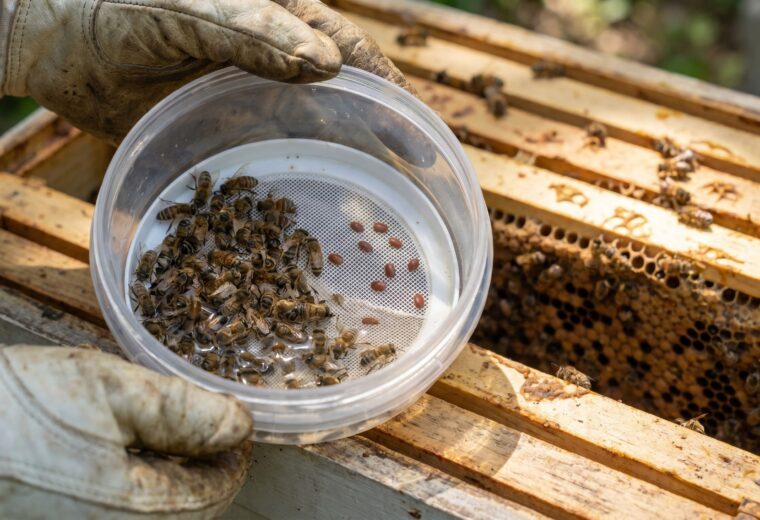
After washing, count the mites in the collection jar. Divide by the number of bees you actually collected, then multiply by 100. The result is your infestation percentage.
Here is the same method written out for the three most common sample sizes:
| Mites counted in wash | Bees in sample (approximate) | Infestation rate | Late-summer verdict (use 2% trigger) |
|---|---|---|---|
| 2 | 300 | 0.7% | Below threshold - retest in 3-4 weeks |
| 4 | 300 | 1.3% | Approaching threshold - retest within 2 weeks |
| 6 | 300 | 2.0% | At threshold - treat now |
| 9 | 300 | 3.0% | Above threshold - treat immediately |
| 12 | 300 | 4.0% | High load - act today; evaluate for additional treatment round |
| 2 | 200 | 1.0% | At Feb threshold (1%) - treat in late winter |
| 4 | 200 | 2.0% | At summer threshold - treat now |
A practical note on sample accuracy: the more bees you wash, the more reliable the result. Virginia Tech's entomology group sets 200 bees as the standard target sample size for an alcohol wash, with an acceptable range around that figure. If you collect fewer than 150, the percentage can swing enough on a recount to cross a threshold in either direction. When in doubt, do the wash again with a fuller sample rather than acting (or not acting) on a thin count.
The late-summer knockdown: the one window you cannot afford to skip
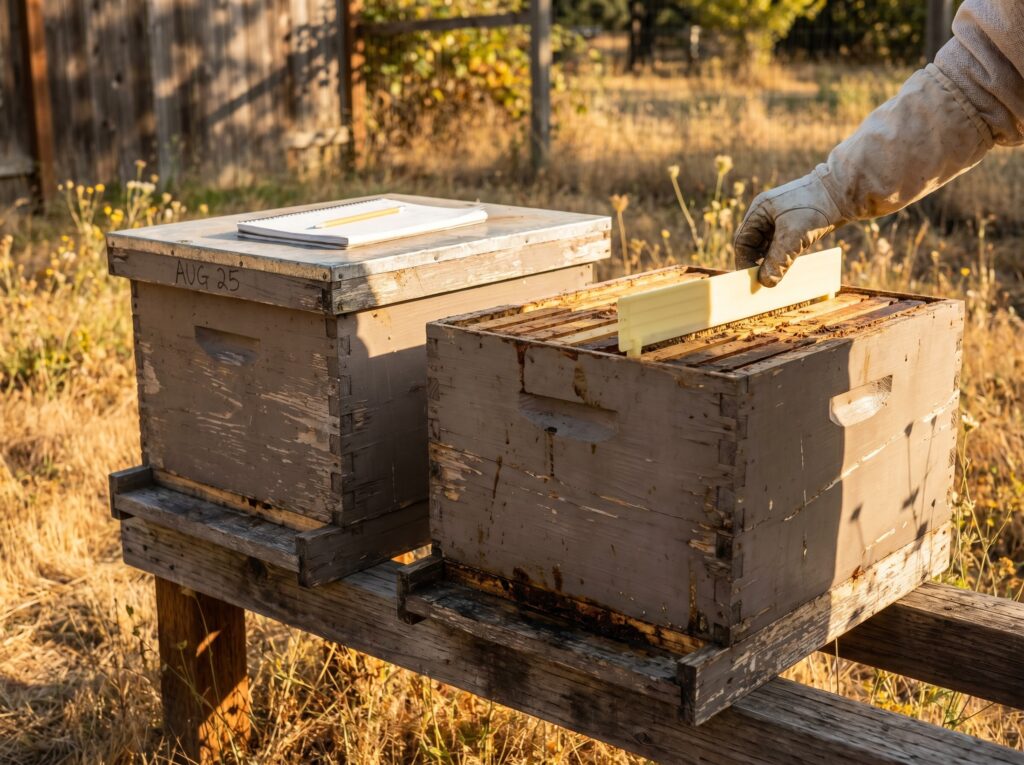
The phrase "late-summer knockdown" refers to a deliberate, timed treatment - typically in late July or the first two weeks of August in most northern states - aimed at driving mite counts as low as possible before the colony starts rearing winter bees. Mississippi State University Extension frames the calendar logic this way: colonies should be sampled "at least twice a year - once in late February and again in July," with the July sample providing enough lead time to complete a 40-50 day treatment course before winter bee production peaks.
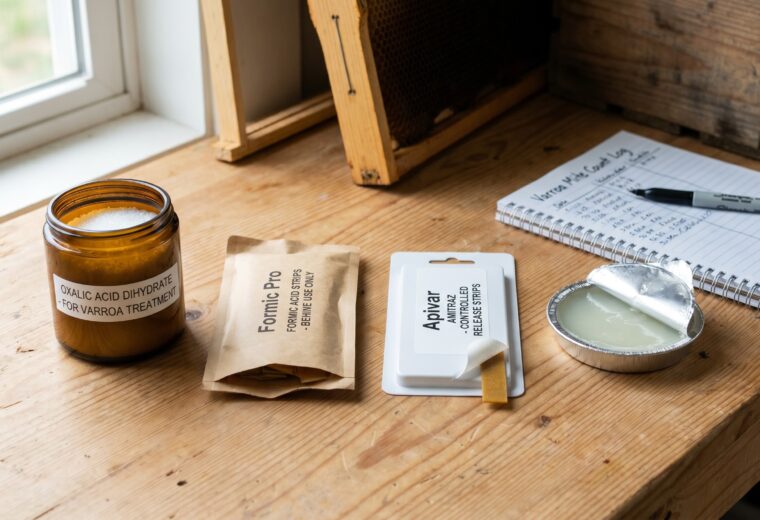
The strategic math behind this is worth understanding. The Apivar label (Veto-Pharma USA) specifies a minimum of 42 days and a maximum of 56 days when brood is present, with the Apivar 2.0 label extending that to 6-10 weeks (up to 70 days). If a 6-to-10-week treatment (such as Apivar) starts August 1, strips come out anywhere from mid-September (42-day minimum) to early October at the 56-day standard, or into mid-October with the full 10-week protocol. In a colony with a laying queen, workers reared from cells capped after mid-August will emerge into a post-treatment world with far fewer mites. The longer the treatment window runs relative to the brood cycle, the more clean brood cycles the colony completes before clustering - which is why starting as early as late July gives the best outcome.
What happens when this window is skipped? The mite population, left untreated through August, can roughly double in three to four weeks during peak summer brood. A hive at 2% on July 25 can realistically reach 4-5% by mid-August without intervention. The winter bees developing in those cells carry a heavier viral load, shorten their own lifespans, and the colony enters cold weather already compromised. MSU Extension is direct about the consequence: "Avoid high varroa mite populations and viral loads during winter bee production to keep the winter bees as healthy as possible."
For a deeper look at which treatments remain legal with honey supers on, which require supers off, and how temperature constrains formic acid options in August heat, the varroa treatments comparison covers each product's timing constraints and efficacy. The winter prep checklist also includes a mite-check gate as a go/no-go step before any other winterization work.
What "at threshold" actually means in practice
Reaching the threshold is not a suggestion to schedule a treatment sometime this month. Penn State Extension describes the threshold as the point at which "damage will occur" - meaning mite-induced virus pressure is already affecting developing brood. Waiting two more weeks because the weather is inconvenient or because you want to finish the honey harvest adds two more weeks of winter-bee damage you cannot undo.
A few practical realities the numbers alone do not capture:
- Mite counts vary by location in the hive. Sampling near the brood nest where nurse bees cluster gives a more accurate count than sampling from an outer frame. If you are not certain you scooped nurse bees, your count may be lower than the actual load. When in doubt, err toward treating.
- A single count is a snapshot. Counts above threshold in late July merit immediate action. Counts below threshold warrant a retest in three to four weeks, not a clean bill of health.
- Alcohol wash is the most accurate method available to hobbyists. Penn State Extension cites accuracy as the reason to prefer it: "Alcohol washes are the most accurate method for monitoring mite populations." A supplementary note worth knowing: sugar rolls return living bees and any dislodged mites to the hive, which is why some beekeepers prefer them for routine monitoring without sacrifice - but the method's accuracy depends on how completely the powdered sugar dislodges mites, and results can vary. The alcohol wash and sugar roll how-to walks through both procedures with exact jar sizes and timing.
- A colony with other stressors - poor queen, chalkbrood, nutritional deficit - warrants treating at a lower threshold than a strong hive. The 3% number assumes a colony otherwise in reasonable health.
For context on what varroa actually does to a colony at the cellular and colony level, the foundational varroa mite overview covers the biology and why this parasite has become the primary driver of US colony losses. And once you have decided on treatment, the comparison of registered products by efficacy, temperature range, and honey-super compatibility is in the treatments guide.
Monitoring frequency that matches the calendar
NC State Extension recommends sampling at least once every three weeks during autumn. The USDA recommends monthly checks during summer. Putting those together, a practical backyard monitoring schedule looks like this:
- Late February: first sample of the year. Threshold: 1% (3 mites in a 300-bee wash). Treat before population ramps up.
- April - June: monthly wash. Threshold: 2-3%. Treat before supers go on if at or above threshold.
- July (critical): sample by the third week of the month at the latest. Threshold: 2%. This sample determines whether you have time for a full treatment cycle before winter bee production.
- August: sample again if you treated in July to verify knockdown. Target: below 1%.
- September: every three weeks. Threshold: 2% per current Honey Bee Health Coalition guidance (treat immediately at or above).
- November or December (broodless): treat with oxalic acid vaporization regardless of count if you did not treat in late fall. The broodless window is the most efficient treatment opportunity of the year.
That November or December broodless treatment is not a panic measure - it is maintenance. Oxalic acid does not penetrate sealed brood, so a dribble or vapor application during the broodless period reaches virtually every mite in the colony. Even a hive that tested clean in September should be evaluated again before the cluster tightens, because mite populations can rebound through October from drifting foragers or robbing bees from neighboring hives.
Questions answered
What is the standard varroa treatment threshold?
The most widely cited US threshold is 3 mites per 100 bees (3%), confirmed by the USDA ARS and Mississippi State University Extension. In late summer, many programs lower the action point to 2% because the bees developing at that time are winter bees - physiologically different workers whose health determines colony survival. In February, the threshold drops further to 1% because the colony is small and any mite load compounds quickly as brood ramps up.
How do I count mites to check against the threshold?
Collect about 300 bees (half a cup) into a jar from a frame of capped brood where nurse bees are concentrated. Add 70% isopropyl alcohol, shake for at least 30 seconds (many extension guides suggest 30-60 seconds or a 1-2 minute wait to ensure full dislodgement), pour through a mesh screen, and count the mites that wash out. Divide the mite count by the number of bees collected, multiply by 100 for the percentage. Six mites from 300 bees equals 2% - at or above the late-summer action threshold.
Why is late summer the most important treatment window?
Workers reared from August through September are winter bees - they carry the fat reserves that fuel the cluster through cold months and raise the first spring brood. Varroa mites feeding on their developing pupae transmit viruses that shorten these bees' lifespans. Mississippi State University Extension recommends sampling in July specifically so a full 40-50 day treatment course can finish before winter bee production peaks. Missing this window is the single most common cause of spring dead-outs in otherwise well-managed hives.
Can a hive test above threshold but not need treatment right now?
During the honey flow when supers are on, your treatment options narrow - some products cannot be used with supers in place. You would remove the supers, treat, and then replace them (or choose a supers-compatible product). Delay itself is not advisable; Penn State Extension describes reaching the threshold as the point at which damage to developing brood is already occurring. What changes is the product, not the timing of the decision to act.
What if my count falls right at the threshold number?
Treat. The threshold is an action point, not a number to watch from a safe distance. A count at or above the applicable threshold - 2% in late summer and fall per Honey Bee Health Coalition guidance, or 3% per older USDA general guidance - means the infestation is already at the level where action is warranted. Counts at exactly the threshold in late summer should be treated immediately, because the mite population can double in three to four weeks during active brood season.
- USDA Agricultural Research Service, Carl Hayden Bee Research Centerused for the 3-mites-per-100-bees general action threshold and monthly summer monitoring guidance
- Mississippi State University Extension Serviceused for February (1%) and July sampling schedule, winter bee production window, and the prohibition on treating during winter bee production
- University of Minnesota Bee Labused for the 2% summer action threshold (6 mites in a 300-bee wash) and the year-round below-1% aspirational target
- Penn State Extensionused for alcohol wash as the most accurate monitoring method, fall treatment as a key factor in overwintering survival, and winter bee fat-body physiology
- Rosenkranz et al., PMC3338694 (peer-reviewed, PLOS ONE)used for the finding that low varroa infestation before and during the winter-bee transition increased lifespan and colony survival, and for the winter mortality outcomes in treated vs. untreated colonies
- Veto-Pharma USAApivar Instructions for Use (USA label) - used to confirm the correct Apivar treatment duration of 42-56 days minimum/maximum with brood present, and 6-10 weeks (up to 70 days) for Apivar 2.0
- Veto-Pharma FAQ blogused to confirm Apivar label duration guidance
- Honey Bee Health Coalitionused for the current fall/late-summer action threshold of 2 mites per 100 bees (2%), which updates the older 3% figure