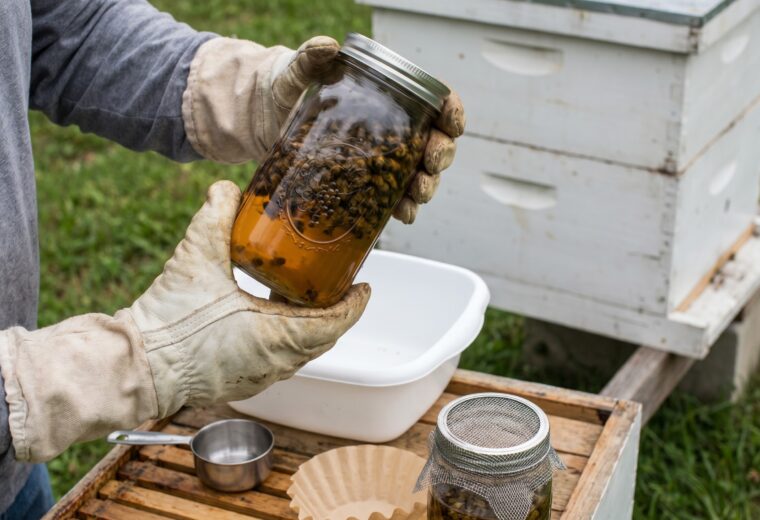
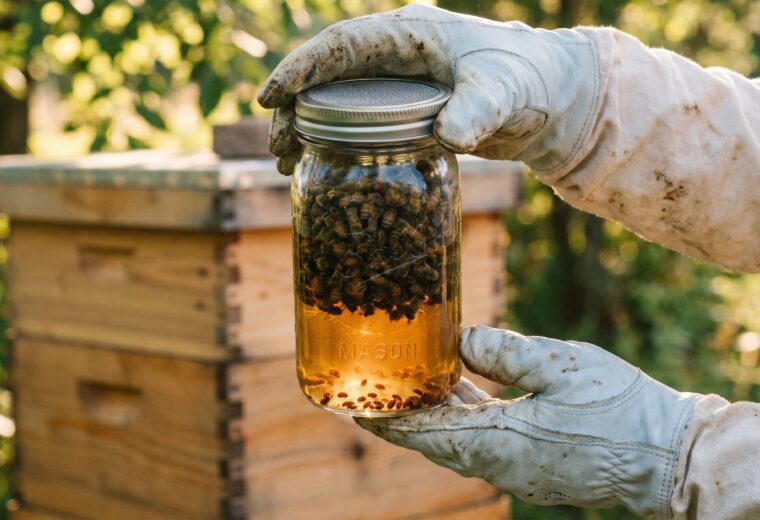
Varroa treatments compared: oxalic acid, formic acid, Apivar, and thymol
Compare four registered varroa mite treatments - temperature windows, supers-on rules, efficacy, and which to choose by season. A season-aware selector for US backyard beekeepers.
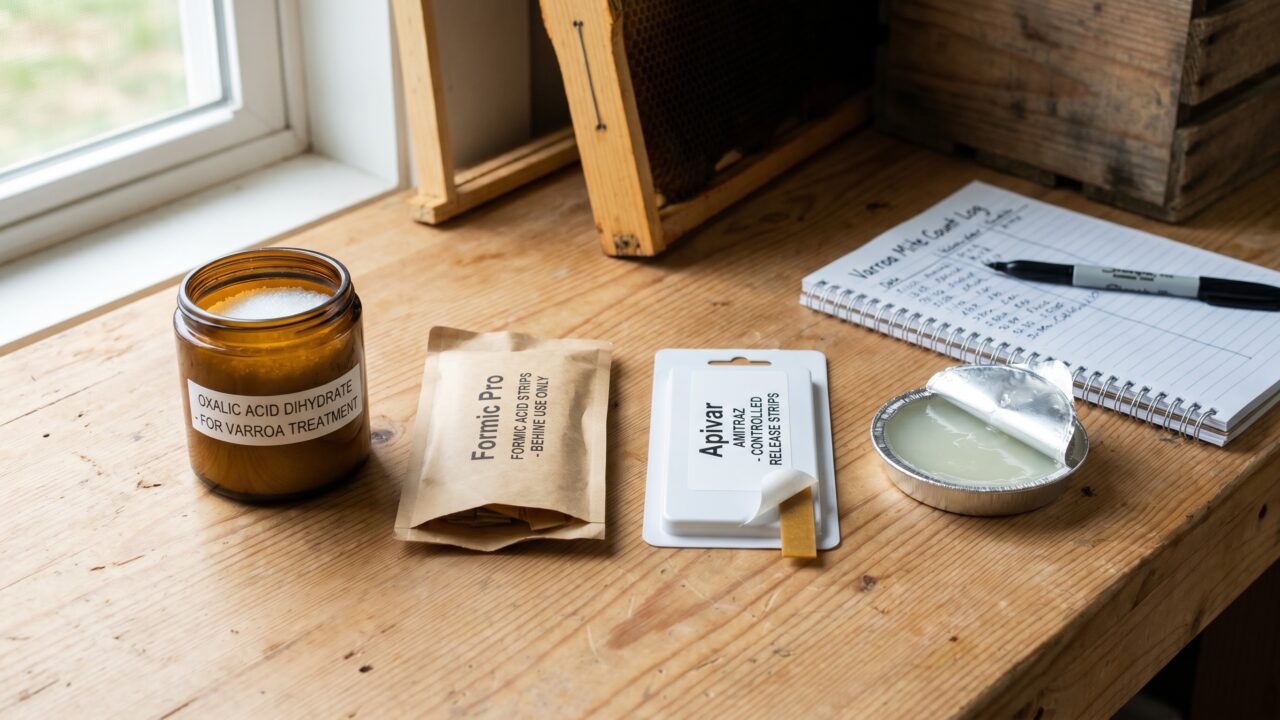
Pick the wrong varroa treatment for your calendar and you can lose your queen, spoil your honey, or watch mites rebound in six weeks. Each of the four main options - oxalic acid, formic acid (Formic Pro), amitraz (Apivar), and thymol (Apiguard) - operates inside a specific temperature band, either requires supers off or allows them to stay, and reaches or misses mites hiding in sealed brood. Getting those three variables right is what this comparison is for.
If you are new to the biology of varroa or unsure whether your count has crossed the line that warrants treatment, start there. This article picks up once you have confirmed the colony needs intervention.
The single biggest beginner mistake with varroa treatments
Most new beekeepers reach for a treatment before checking the temperature forecast. Formic acid applied during a heat wave sends the queen off the brood nest. Thymol used in September in New England rarely evaporates enough to matter. Oxalic acid dribbled over a fully capped colony barely dents the mite load because it cannot reach mites under the wax. Temperature and brood status together determine whether a treatment works or makes things worse - they are not secondary details.
A second common mistake: pulling Apivar strips too early. The label requires 42-56 days in the hive and the strips must come out at least 14 days before honey supers go on. Cutting that short leaves both residual amitraz in your honey and a mite population that bounced back.
How the four treatments compare at a glance
The table below consolidates the variables that matter most for a backyard colony. All efficacy figures are for colonies treated as labeled; resistance, colony strength, and brood levels at treatment time affect actual results.
| Treatment | Active ingredient | Temperature window | Supers allowed? | Penetrates capped brood? | Reported efficacy (labeled use) | Best season |
|---|---|---|---|---|---|---|
| Oxalic acid - dribble / vapor (Api-Bioxal) | Oxalic acid | Above 40F for vapor; no upper limit stated on label | No (dribble and standard vapor); supers must be removed | No | ~95% when colony is broodless | Winter / early spring broodless period |
| Oxalic acid - extended-release strip (Varroxsan / Api-Bioxal extended) | Oxalic acid | No specific restriction on label | Yes | No (but slow release catches emerging bees) | Variable; field trials show high fall/early summer efficacy | Spring through fall with supers on |
| Formic acid (Formic Pro / MAQS) | Formic acid | 50-85F daytime high | Yes | Yes - only registered product that reaches mites under cappings | Effective for 2+ months posttreatment in winter, spring, summer | Spring, early summer, fall (avoid heat wave) |
| Amitraz (Apivar strips) | Amitraz 3.33% | No specific temperature restriction on label; works across seasons | No - supers off; remove 14 days before placing supers | No direct penetration; contact kills phoretic mites over 42-56 day exposure | Up to 95% at labeled exposure; resistance is increasing | Late summer / fall after supers come off |
| Thymol (Apiguard) | Thymol 25% gel | 60F minimum (less effective below 60F); EPA label states do not use when daily high is above 105F | No - not approved during a honey flow | No | 85-95% under optimal temperature conditions | Late summer / early fall after harvest |
Oxalic acid: high ceiling, narrow window
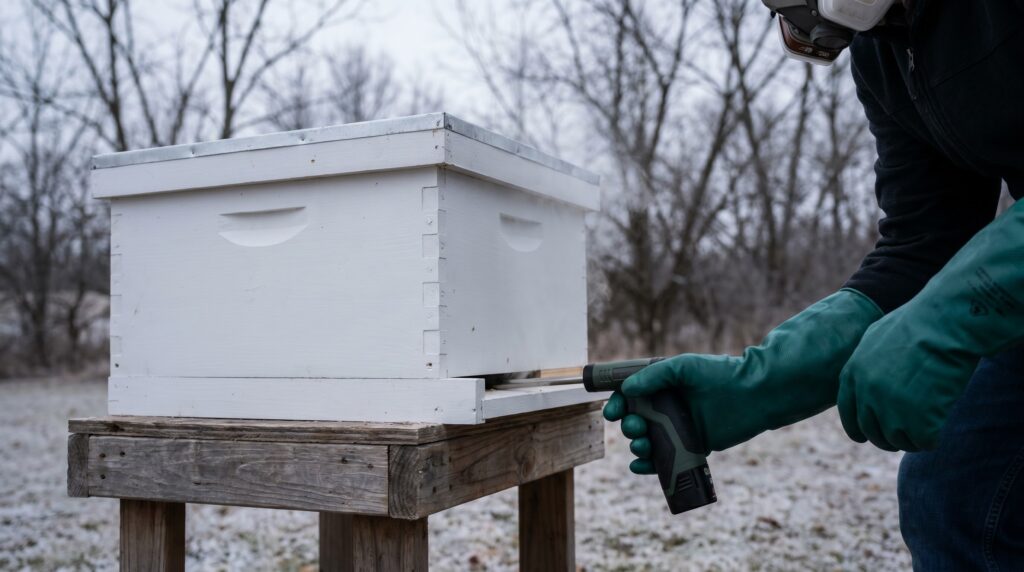
Oxalic acid is the closest thing beekeeping has to a precision tool - when the colony is broodless, vapor or dribble applications run about 95% efficacy (Mann Lake product testing data). When there is significant capped brood in the frames, that number drops sharply, because oxalic acid cannot pass through wax cappings. Mites reproducing inside sealed cells survive the treatment entirely.
This is why the most productive use is the winter broodless window, typically late November through January in most of the US. One or two vapor treatments at that point catches nearly every phoretic mite on adult bees. Penn State Extension describes the dribble and vapor methods as "most useful as a winter or early spring method" for exactly this reason.
During the active season with brood present, you need multiple applications - commonly four vapor treatments spaced five days apart - to intercept mites as bees emerge from cells. That is manageable but labor-intensive. The extended-release formulations (sold as Varroxsan in some markets) sidestep this by releasing oxalic acid slowly over weeks, and their label allows honey supers to remain on the hive. Field trials by WSU Extension found the extended-release approach "highly effective during fall and early summer applications."
PPE is non-negotiable with any oxalic acid application. Use a NIOSH-approved particulate respirator, goggles or a face shield, chemical-resistant gloves, long sleeves, and closed shoes - not because a single exposure is immediately dangerous, but because repeated exposure without protection accumulates risk. More on proper application in the dedicated oxalic acid treatment guide.
Formic acid (Formic Pro): the only option that reaches sealed brood
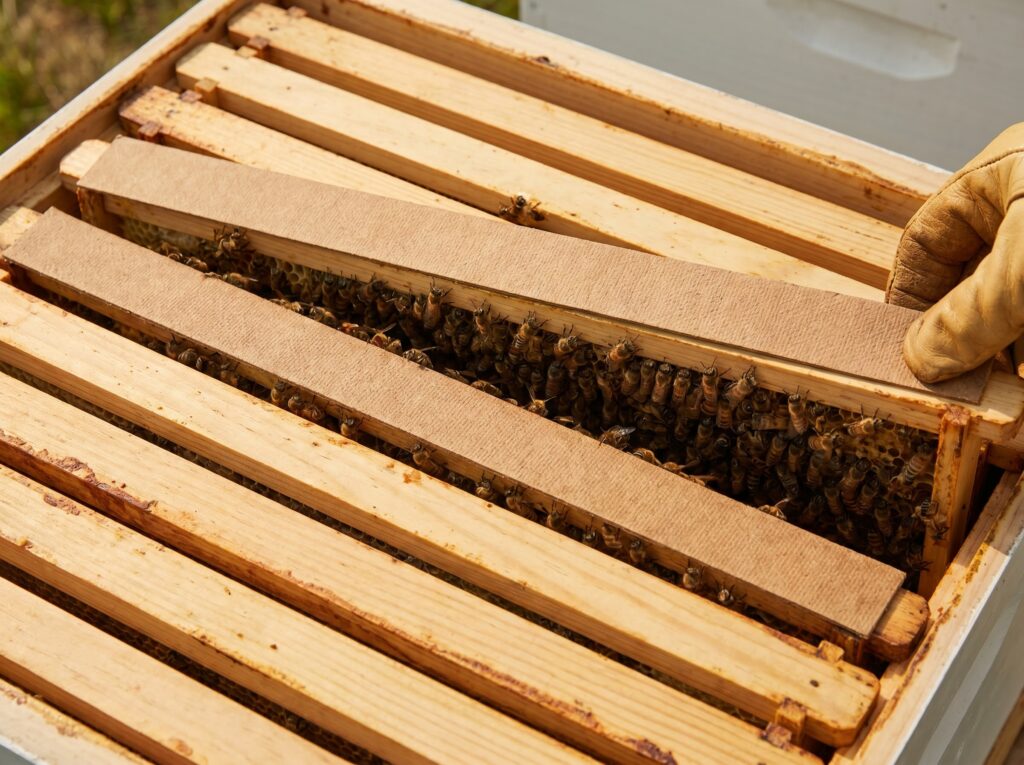
Formic acid is gaseous at hive temperatures. That gas diffuses under wax cappings, which makes Formic Pro and MAQS the only registered varroa treatments that kill mites reproducing inside sealed cells - a meaningful advantage over every other product in this comparison. Ask Extension's varroa FAQ puts it plainly: these are "the only treatments known to kill varroa mites in the sealed brood."
The tradeoff is a strict temperature window. The manufacturer NOD Apiary Products Ltd. states on their official FAQ that daytime highs must stay between 50F and 85F (10-29.5C). Below 50F, the formic acid does not volatilize enough to be effective. Above 85F, the vapor concentrations inside the hive spike to the point where queen loss and increased brood mortality become real risks. A peer-reviewed seasonal efficacy study (PMC11132127) confirmed this directly, noting that the researchers "do not recommend using a formic acid treatment during periods when the average ambient temperature is beyond the labeled temperature use range, as it can impact colony health negatively."
In practice, that window works well for spring treatments (April to May in most states), early summer before the heat of July and August, and again in September and early October as temperatures moderate. Honey supers can stay on, which matters if you are still in a late-season flow. For a full treatment protocol and the two dosing schedules (14-day versus 20-day), see the Formic Pro temperature and timing article.
The same seasonal efficacy study found that MAQS "significantly delayed V. destructor populations for 2 months posttreatment in the winter, spring, and summer seasons" - a consistent performance across three of four seasons, which is better than most alternatives.
Apivar (amitraz): the workhorse fall treatment
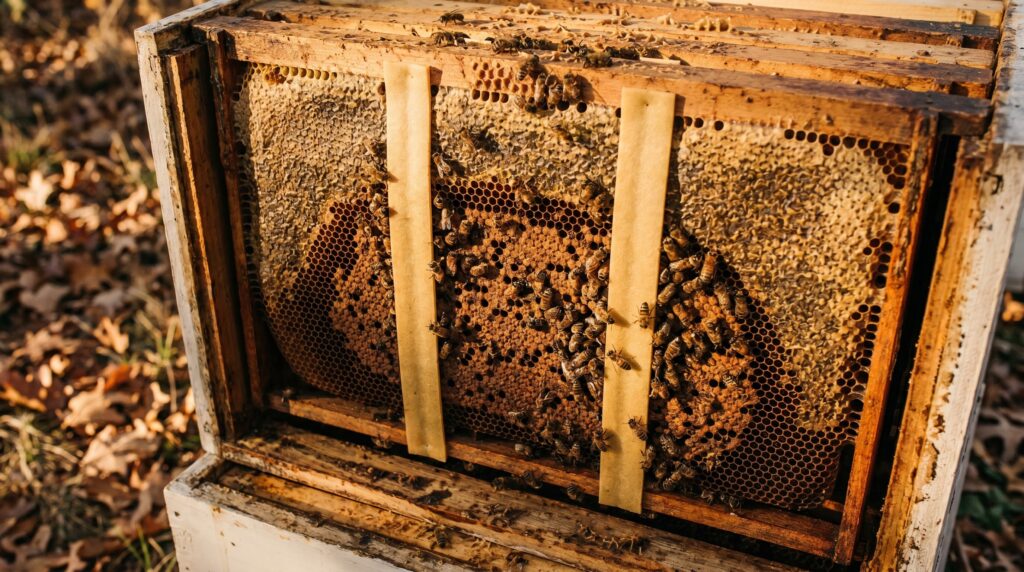
Apivar strips work by continuous slow-release contact. Bees walking across the strips pick up amitraz and transfer it to mites on their bodies. There is no brood penetration - this is purely a contact miticide for phoretic mites - but with strips in the hive for 42-56 days, the bees do the distribution work and the mites have no way to avoid exposure. Under full labeled exposure, efficacy can reach 95%, comparable to a well-timed oxalic acid treatment in a broodless colony.
The critical constraint is supers. Amitraz must not be present in honey. The label requires removing supers before strips go in and keeping them out for 14 days after the strips come out. This makes Apivar a post-harvest tool for most backyard beekeepers - strips go in when the last super comes off in late summer, typically August or September, and come out before the colony is fully clustered.
Resistance is the issue to watch. Research published in PMC11132127 found that "reports of mite resistance to amitraz have become more common since 2016," and resistance now ranges from minimal to treatment failure depending on the apiary. If you have run Apivar as your only treatment for several consecutive years and mite counts are not dropping, resistance is the first thing to investigate. Rotating to a different mode of action - formic acid or oxalic acid - in alternate years is the standard IPM recommendation.
Temperature does not restrict Apivar the way it does formic or thymol treatments. The same seasonal efficacy study found Apivar "delayed V. destructor resurgence for 2 months in the winter but only delayed resurgence for 1 month in the other seasons" - suggesting the fall and winter application timing is most productive for this product.
Thymol (Apiguard): the warm-weather organic option after harvest
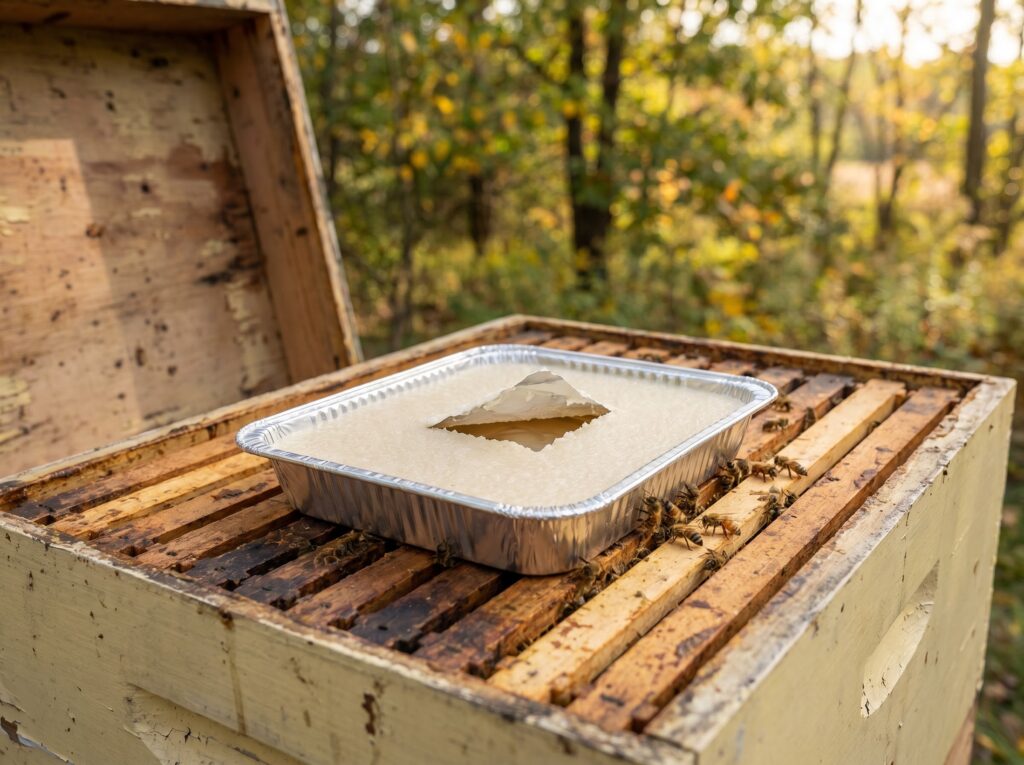
Apiguard is a 25% thymol gel that releases thymol vapor when bees fan the open tray. The vapor kills phoretic mites on adult bees but, like oxalic acid, cannot reach mites under cappings. Mann Lake's product data lists efficacy at 85-95% under optimal conditions. The EPA-registered label (September 2024) sets the floor at 60F - below that the thymol does not evaporate adequately - and states not to use the product when the maximum daily temperature is above 105F.
This makes the prime window late summer and early fall after supers come off: warm enough to volatilize well, cool enough not to cook the brood. Two trays are placed sequentially (roughly 10-14 days per tray, four weeks total). The product is not approved for use during a honey flow, so supers come off before treatment begins.
Thymol's appeal is that it leaves no residue that persists through winter and is perceived as a "softer" chemical by beekeepers who prefer organic-approved products. The PMC8624935 study found thymol "most effective between 20 and 30°C" (68-86F), with "effectiveness lost below 15°C" (59F). In the northern US, the available warm window after harvest can be short - sometimes only three to four weeks before nighttime lows start pulling the maximum daily temperature below the effective range.
Season-aware treatment selector
Below is a practical decision map built on the temperature, brood, and supers constraints from the comparison table above. Match your situation to the row that fits.
| Your situation | First choice | Alternative | Why |
|---|---|---|---|
| Colony broodless in winter (Nov-Jan), no supers | Oxalic acid - dribble or vapor | Oxalic acid extended-release | Highest efficacy possible; ~95% against phoretic mites with no competition from sealed brood |
| Spring buildup, supers not yet on, daytime 50-85F | Formic Pro | Oxalic acid (multiple vapor treatments) | Formic reaches mites in brood; supers-free is fine for now; temperature window is ideal |
| Active honey flow, supers on, count crossed 2% | Formic Pro | Oxalic acid extended-release strip | Only registered products legal with supers on; formic penetrates brood; extended OA catches emerging bees |
| Midsummer, daytime high regularly above 85F | Oxalic acid extended-release | Wait for a cooler week; monitor tightly | Formic and thymol are both out of safe temperature range; Apivar requires supers off |
| Late summer / fall, supers just came off, daytime 60-85F | Apivar | Formic Pro or Thymol (Apiguard) | Apivar is the stronger default for late-fall timing: seasonal efficacy research (PMC11132127) found formic acid (MAQS) delayed mite resurgence for only 1 month in fall versus 2 months in winter, spring, and summer. If brood is still present and temperatures allow, Formic Pro addresses mites in sealed cells but expect shorter protection than a spring treatment; Apiguard is viable if temperatures remain warm for the full 4-week course |
| Used Apivar for 2+ consecutive years, mite count not dropping | Formic Pro or oxalic acid | Thymol (Apiguard) | Amitraz resistance likely; switch mode of action |
| Emergency: count above 5% in August, supers still on | Formic Pro | Remove supers immediately; use Apivar | At 5% mite load during winter bee rearing, you are already losing the generation that will carry the colony through winter; act fast |
The late-summer window is the one that saves colonies
Most winter deadouts traced to varroa are not caused by winter itself. They are caused by high mite loads in August and September, when the colony is rearing the long-lived winter bees. Mites parasitizing pupae at that stage shorten bee lifespan, compromise immune function, and transmit deformed wing virus. A colony that enters October with a count above 2 mites per 100 bees is working against significant odds.
Penn State Extension's monitoring guidance targets keeping mite levels "below or around a mean abundance of 2 mites per 100 bees." Two mites per 100 (2%) is the current HBHC action threshold where treatment is warranted - not a safe zone to settle into. Do an alcohol wash in mid to late July. If you are at or approaching 2%, treat before August is over. If supers are still on, Formic Pro is your tool. If they are off, Apivar gives you the longest residual window into fall.
How to measure accurately is covered in detail at the varroa monitoring guide, and the threshold discussion - including what counts mean at different times of year - is in the varroa mite thresholds article. For a full integrated approach that combines treatment timing with brood breaks and resistant stock, the varroa IPM overview pulls those pieces together.
A note on resistance and rotation
No single treatment should run every cycle indefinitely. Amitraz resistance has been documented in US apiaries since at least 2016 and is no longer a rare exception. Pyrethroids such as fluvalinate (sold as Apistan, an older synthetic miticide) carry even wider resistance - near-universal in much of the US - which is why they are effectively obsolete and not covered in this comparison. Rotating between modes of action - oxalic acid in winter, formic in spring, amitraz or thymol in fall - reduces selection pressure on the mite population.
Organic-approved options (oxalic acid, formic acid, thymol) leave no synthetic residues and carry no PHI (pre-harvest interval) concerns with honey the way amitraz does. If you run a single-deep hive that almost never goes broodless, formic acid becomes particularly valuable because it is the only legal way to reach mites in capped cells without removing supers. A more detailed look at what "supers on" specifically means for treatment choices is in the treating mites with supers on guide.
Questions answered
Can I use oxalic acid when my hive has brood?
Yes, but expect substantially lower efficacy than a broodless treatment. Oxalic acid stays on adult bees - it does not pass through cappings - so any mite reproducing inside a sealed cell survives the application. With significant brood present, repeated vapor treatments spaced several days apart are necessary, which adds up to a fair amount of hive disturbance. For colonies that will not be broodless at any point in your treatment window, extended-release strip formulations are a more practical option because the continuous slow release intercepts mites as bees emerge over several weeks rather than requiring multiple single applications from you.
Formic Pro says supers can stay on - is the honey really safe?
Yes, per the EPA-registered label. Formic acid occurs naturally in honey at low levels, and the label explicitly allows treatment during a honey flow. Follow the temperature limits (50-85F daytime high per the manufacturer's own FAQ) and dosing instructions exactly. The risk is to the colony if temperatures exceed the window, not to the honey.
How long do I leave Apivar strips in, and what if the colony clusters before the 42 days are up?
The label requires 42-56 days. The practical concern for northern beekeepers is placing strips in early September and then watching temperatures drop quickly: bees that have clustered tightly move across the strips far less, reducing amitraz pickup. If your area sees hard frosts in October, place strips no later than mid-August so the full 42-day contact window closes while bees are still moving freely. If clustering does happen early and you have not yet hit 42 days, leave the strips in for the full period anyway - clustered bees still walk across strips during warm breaks - and remove them before adding supers in spring. Do not pull strips short just because the colony has gone quiet for a few weeks.
What if my mite count stays high after treatment?
Two possibilities: the treatment was applied outside its effective conditions (wrong temperature, brood present during an oxalic-only treatment, strips removed too early), or resistance has developed. With Apivar specifically, amitraz resistance is now documented in US apiaries. Run a post-treatment wash 42-48 hours after completion to assess knockdown. If counts are not moving, switch to a different mode of action - formic acid or oxalic acid - and consider consulting your state apiarist or a local bee inspector.
Do I need a license to use these treatments?
In most US states, backyard beekeepers can purchase and apply registered varroa treatments - oxalic acid, formic acid, Apivar, Apiguard - without a pesticide applicator's license, provided they follow the EPA-registered label. State rules vary, so check with your state department of agriculture. Always treat according to the label; the label is the law.
- Penn State Extension"Methods to Control Varroa Mites: An Integrated Pest Management Approach" - used for brood penetration data, temperature effects, monitoring thresholds, and treatment descriptions
- NOD Apiary Products Ltd.Formic Pro manufacturer official FAQ - used for authoritative temperature window (50-85F / 10-29.5C), supers-on authorization, and brood penetration confirmation
- US EPA Pesticide Product Label, APIGUARD, 09/17/2024used for upper temperature limit (above 105F do not use) and label statement that Apiguard has no harmful effect on brood when used as directed
- Mann Lake Ltd.Apiguard product page - used for lower temperature limit (60F), efficacy range (85-95%), and honey-flow restriction
- Veto-pharmaApivar product page - used for active ingredient concentration (Amitraz 3.33%)
- PMC11132127"Evaluating the seasonal efficacy of commonly used chemical treatments on Varroa destructor" - used for seasonal efficacy comparisons (Apivar, MAQS, OA dribble by season), reduced fall efficacy of formic acid (1-month delay in fall vs 2 months in other seasons), and amitraz resistance timeline
- Ask Extension FAQ #896347used for Apivar supers rules and strip duration (42-56 days), and formic acid brood penetration statement