How to buy bees: choosing a package, a nuc, or a caught swarm for your first hive
Compare packages, nucs, and free swarms for your first colony: what each costs, what survives, and when to order. A clear decider for new US beekeepers.
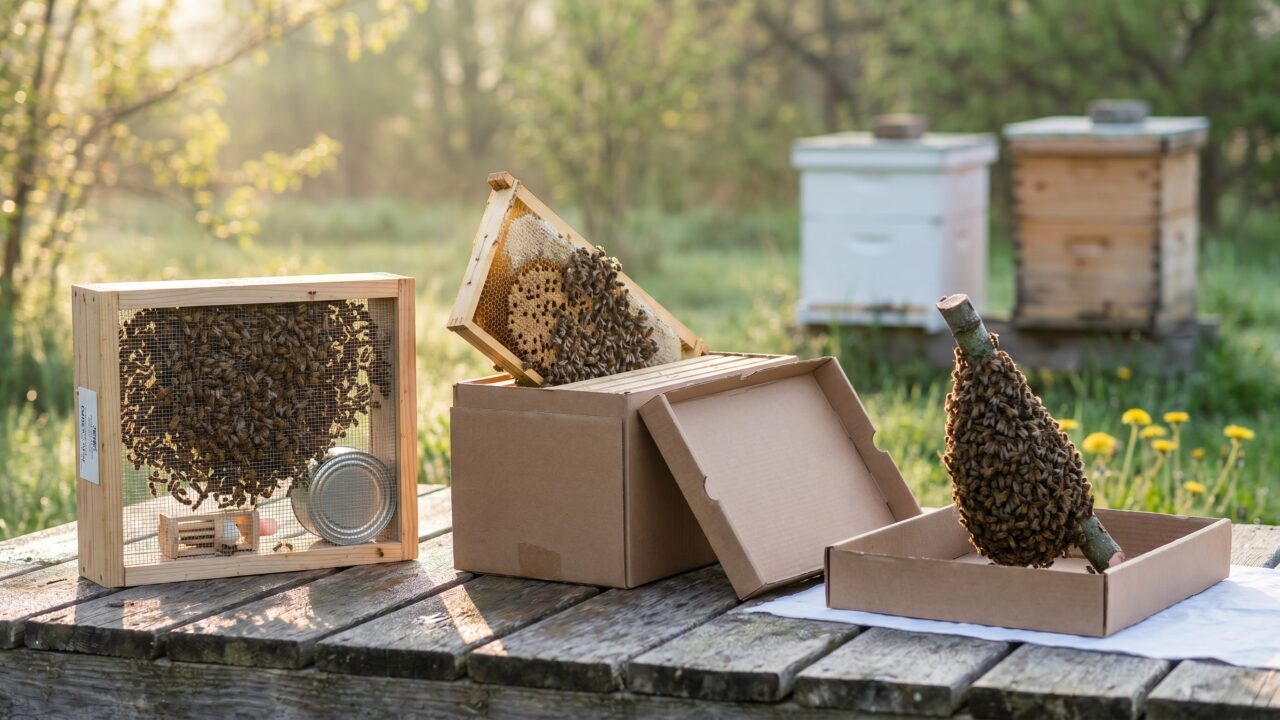
You have three honest ways to get your first colony: buy a package of bees, buy a nuc, or catch a free swarm. For most new US beekeepers a nuc is the gentlest start because it is already a small working hive, a package is the cheaper and more widely shipped option, and a swarm costs nothing but arrives without a track record. The catch that surprises everyone: bees are a winter purchase. Suppliers sell out by late winter, and you pick up live bees in spring, usually April or May, to catch the season's first real nectar.
So the decision is not only which kind of bees. It is also ordering early enough to get any at all, and understanding that whatever you buy, year one is about building the colony, not collecting honey.
The three ways to get bees, side by side
Each option starts your hive at a different stage. A package is a fresh start from bare frames. A nuc is a colony already underway. A swarm is an unknown that sometimes works out well and sometimes does not. Here is how they compare on the things that actually decide your first season.
| Factor | Package | Nuc (nucleus colony) | Caught swarm |
|---|---|---|---|
| What you get | About 3 lb of loose worker bees (roughly 10,000) and a separate caged queen; no comb, no brood | A small working hive: 4 to 5 frames of drawn comb with brood, stored honey and pollen, and a laying queen | A loose cluster of bees with their own queen; no comb, no equipment, no guarantees |
| Typical 2026 street price | About $140 to $200 with shipping and a marked queen (institution bee-only floor near $80 to $100) | About $180 to $300 (institution range $150 to $250) | Free |
| Head start | None; the queen is a stranger the bees must accept, and they draw all comb from scratch | Weeks ahead; brood is already hatching and the queen is proven laying | Unknown; a strong early swarm can outpace a package, a late or weak one struggles |
| How you get it | Shipped or picked up; produced mostly in southern states | Local pickup only; nucs are not shipped | You collect it, often from a swarm-call list |
| Main risk | Queen rejection, slow start, hungry bees that need steady feeding | Used frames may carry disease spores or pesticide residue; grows fast and needs space sooner | No known genetics or health history; may carry mites or disease; may abscond |
| Best for | Budget-minded beginners who can feed diligently and want the most availability | First-timers who want the surest, fastest establishment and can buy local | Patient beekeepers with a hive ready and a mentor on call |
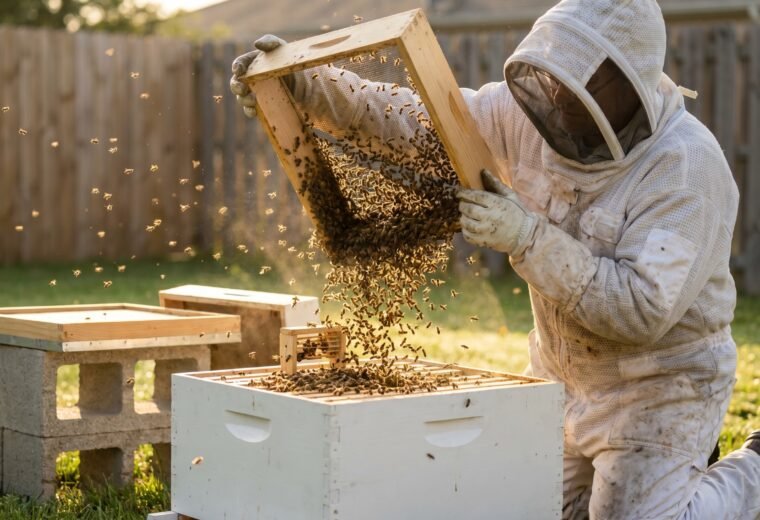
One thing the table cannot show is feel. A package is dramatic: you shake a box of strangers into an empty hive and hope the queen wins them over. A nuc is calm: you slide five frames of an existing colony into your box and the bees barely notice the move. If this is your first time at an open hive, that calm is worth a lot.
What a package actually is, and how it starts
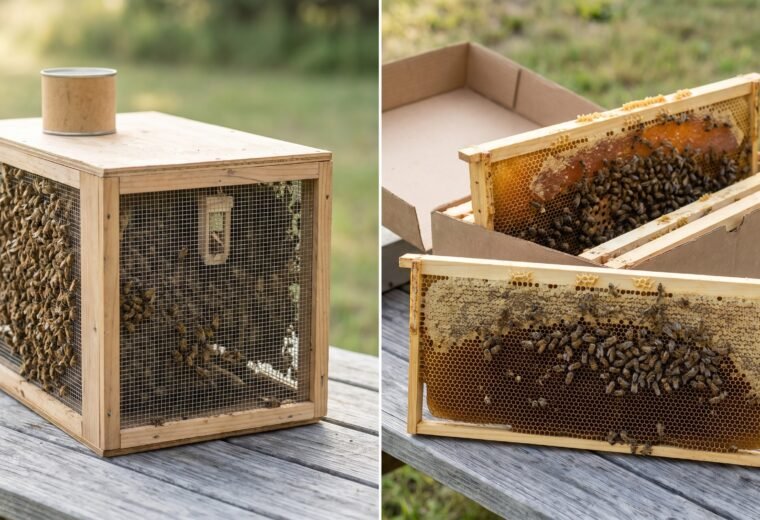
A package is a screened box of loose bees with a queen caged separately inside. Penn State Extension describes the standard package as roughly 10,000 workers and a queen. Those bees have no comb, no brood, and no stored food. They are a workforce without a home, and the queen riding along was raised somewhere else, so the colony has to accept her over the first few days.
That fresh start is the package's whole character. Because the bees lack honey, pollen, and comb to grow from, they must be fed steadily, usually 1:1 sugar syrup, to draw out comb fast enough to get going. Skip the feeding and a package can starve or stall. Feed it well and a spring package catches the May and June nectar flow and builds into a full colony by summer. The mechanics of that first install, and what to watch in the days after, are covered in our walkthrough of getting a package into the hive, and the supplier side is laid out in ordering packages.
What a nuc is, and why it is the easy mode
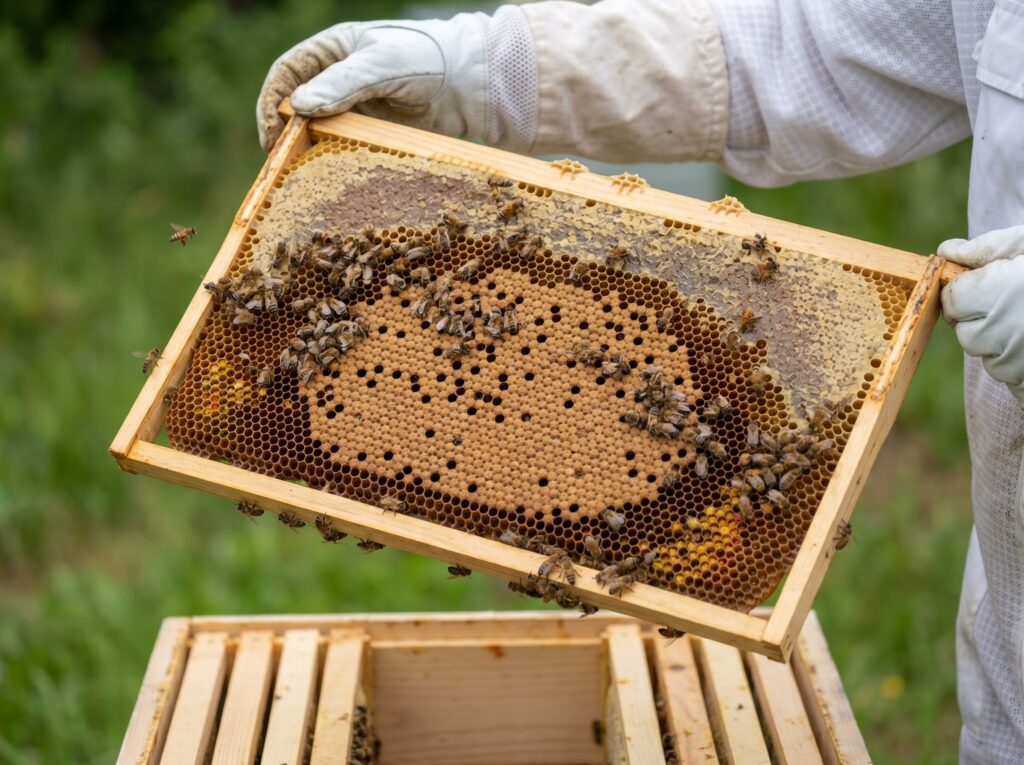
A nuc, short for nucleus colony, is a small but complete hive. MSU Extension describes nucs as complete tiny colonies of four or five frames holding honey, pollen, brood, a laying queen, and all-related worker and nurse bees. UF/IFAS puts it simply: a nuc is a small-sized hive in which a small colony already lives, usually on five frames.
The difference from a package is the drawn comb and the brood. Your queen is already laying, eggs and larvae are already maturing into new workers, and there is food in the frames. Penn State notes nucs do not need to be fed as aggressively as packages because they come with stores. You transfer the frames into your hive and the colony keeps right on running. The trade-offs are real, though. Nucs sell locally only, so you cannot order one shipped across the country, and a healthy nuc grows fast, so you need to be ready to add a box before it crowds. If you want the full picture of what is inside that little box and how to inspect it on pickup day, start with our breakdown of the nuc, then the hands-on steps in moving a nuc into your hive.
The free option: catching a swarm
A swarm is a cluster of bees that left a hive with a queen to start a new home. Catch one and your bees cost nothing. In spring and early summer, clusters hang on branches and fence posts looking for a place to settle, and they are usually remarkably calm because a swarming bee is gorged on honey and has no nest to defend. Penn State notes swarms are very docile, and a reachable cluster can often be shaken straight into a cardboard box.
Free does not mean easy. You get no health history, no known genetics, and no idea of the mite load coming in with them. A swarm can abscond a day later, or carry varroa from its old colony. It is the best deal in beekeeping for someone who already has a hive standing ready and a mentor a phone call away, and a frustrating first colony for someone who does not. If you want to court swarms on purpose, our guide to collecting a swarm covers traps, timing, and the catch itself.
Package vs nuc decider
Most beginners are really choosing between a package and a nuc; the swarm is a bonus, not a plan. Read down this list and go with the side that matches more of your answers, and if you want the longer head-to-head, our full package vs nuc comparison goes deeper. There are no wrong answers, only the start that fits your situation.
| Your situation | Lean package | Lean nuc |
|---|---|---|
| Budget is tight | Yes, it is the cheaper buy | Usually costs more, often $40 to $100 more |
| No local supplier near you | Yes, packages can ship | No, nucs are local pickup only |
| You want the fastest, surest start | Slower; builds from bare frames | Yes, brood and comb already going |
| You can feed syrup faithfully for weeks | Yes, a package depends on it | Helpful but less critical |
| You want to avoid used-frame disease risk | Yes, all-new comb | Inspect frames; ask about the source |
| This is your very first hive and nerves are high | More dramatic to install | Yes, the calmer first experience |
If your answers split evenly, get a nuc. For a true beginner buying locally, the head start and the calmer install usually outweigh the extra cost. Pick a package when price or shipping forces it, and commit to the feeding. Whichever you choose, the day the bees arrive runs the same: our guide to installing your first bees covers both.
When to order, and what survives the first year
Order in winter. Spring bees are produced on a schedule, and the good suppliers fill their package and nuc lists weeks or months before pickup. Wait until March and you may find nothing left within driving distance. You place the order in the cold months, then collect live bees in spring, usually April or May, so the colony has the whole nectar season ahead of it.
A quick word on those price tags. Oklahoma State University Extension prices the bees alone at $80 to $100 for a package and $150 to $250 for a nuc. The street numbers above run a little higher because real 2026 orders usually add shipping and a marked, mated queen rather than bare bees off a truck. And do not confuse the cost of bees with the cost of a hive. A complete Flow Hive, for example, is a full working beehive and no shortcut to free honey. The maker prices it from $669 for the entry Classic, rising to $799 and above for the cedar Flow Hive 2 and 2+, and it does nothing for mites, swarms, or inspections. The bees go inside whatever box you buy; they are a separate line.
Now the honest part about survival. Year one rarely makes honey. A new colony spends the season drawing comb, raising brood, and building numbers, so a first-year hive yields about 0 to 20 lb of surplus, often zero. An established hive in a good year makes roughly 30 to 60 lb. If you bought bees expecting jars of honey by fall, reset that now; the first jars usually come in year two. Our overview of what bees cost walks through the full first-year spend so the bee price sits in context.
And colonies die. The 2024-2025 US survey run through the Apiary Inspectors of America and Auburn University recorded backyard beekeepers losing 51.4% of their colonies, against a 14-year average annual loss of 41.4%. About half of hobby colonies do not survive the year. That makes the bee purchase a recurring cost, not a one-time buy, and it points straight at the reason most of them die.
The thing that decides whether your bees live
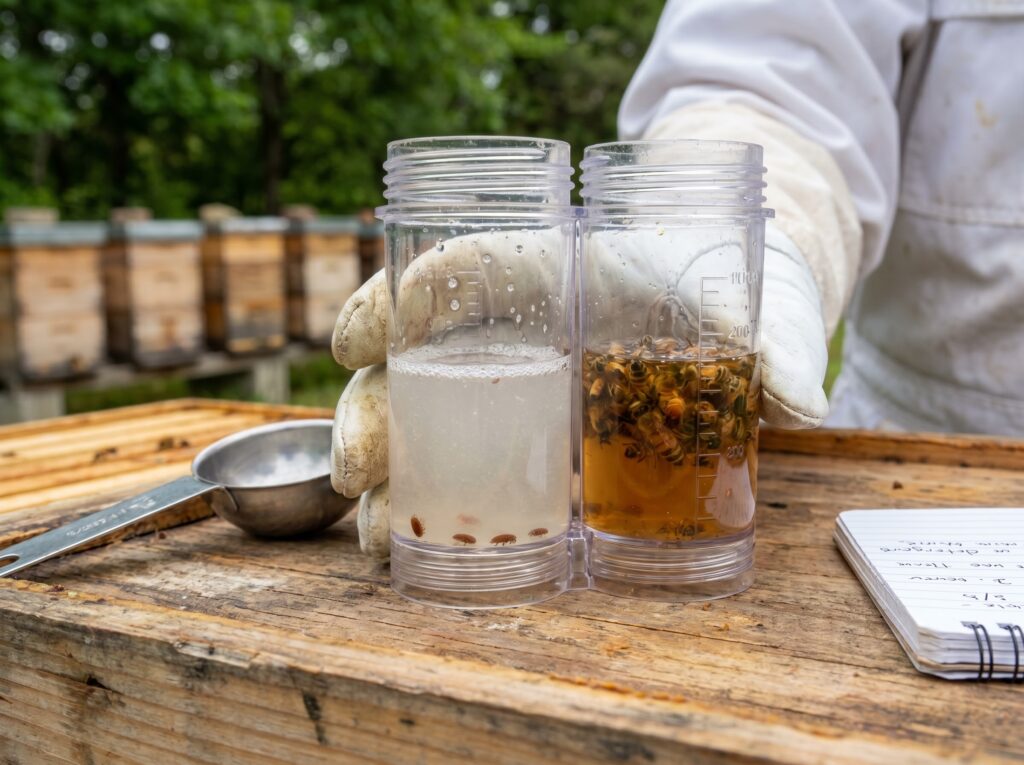
Varroa mites are the single biggest reason colonies collapse, and a brand-new beekeeper who ignores them often loses the hive in the first winter. The mites ride on bees and feed on them, spreading viruses, and the damage builds quietly until it is too late. You cannot eyeball it. You measure it.
The standard check is an alcohol wash. The University of Minnesota Bee Lab measures 300 bees using a half cup, washes them in a detergent or alcohol solution, and counts the mites that fall out. Divide that count by 3 to get mites per 100 bees. The Bee Lab advises keeping levels below about 1% year round and treating when they climb above 2%, which works out to more than 6 mites in a 300-bee sample. Late summer is the check that matters most. The Bee Lab points to acting then so a treatment knocks mites down in time to protect the winter bees that have to carry the colony through to spring.
Treatment is a label-driven, regulated step, so follow the product label and your state guidance rather than guessing. As general framing from Penn State Extension: oxalic acid works best when the colony is broodless, and formic acid is temperature-sensitive, losing efficacy below 50F and risking colony damage above 85F. The full routine of testing and choosing a treatment lives in our coverage of managing varroa; treat it as required reading before, not after, your bees arrive. The bees you buy are only as good as the mite plan you keep.
One more buying choice shapes the colony's temperament and habits: the kind of bee. Italian, Carniolan, and Russian stock behave differently on gentleness, spring buildup, and wintering, and our look at honey bee races helps you ask the supplier the right question before you commit.
Questions answered
Is a package or a nuc better for a first-time beekeeper?
For most beginners buying locally, a nuc is the easier start. It is a small working hive with drawn comb, brood, and a proven laying queen, so it establishes faster and installs more calmly. Choose a package when price or shipping rules out a nuc, and feed it faithfully.
How much does it cost to buy bees?
A package runs about $140 to $200 with shipping and a marked queen, and a nuc about $180 to $300, at current street prices; institution figures put the bees-only floor near $80 to $100 for a package and $150 to $250 for a nuc. A caught swarm is free. The bees are one line in a first-year setup that totals roughly $750 to $1,500.
When should I order bees?
Treat it like booking a holiday: the popular slots go first. Most US suppliers open their lists in late fall and through January, and the sought-after local nucs are often gone by February or early March for an April or May pickup. Expect to pay a deposit, commonly 25% to 50% down or the full amount up front, to hold your spot, with the balance due at pickup. If your only nearby supplier is sold out, get on a waitlist and ask about cancellations, since some open up as winter losses reshuffle who needs what.
Will I get honey the first year?
Usually no. A first-year colony spends the season drawing comb and building numbers, so it makes about 0 to 20 lb of surplus, often zero. An established hive yields roughly 30 to 60 lb in a good year. The first real harvest typically comes in year two.
Can I just catch a free swarm instead of buying bees?
You can, but a free swarm is not a no-strings deal: it arrives with no health history, no known genetics, and a possible mite load, and it may simply leave a day later. One practical screening step makes it far safer. Hive the swarm on its own, away from any other colonies, and run an alcohol-wash mite test in the first week or two before you trust it. If the count is high, treat it before it can spread mites to bees you paid for. A caught swarm suits a beekeeper who already has a spare hive and a mentor on call, not a total beginner with no backup.
- Oklahoma State University Extension, "Beginning Honey Beekeeping Equipment and Associated Costs"used for package, nuc, and startup cost ranges and that nucs are local pickup only
- Penn State Extension, "Honey Bee Management Throughout the Seasons"used for the package definition (~10,000 workers and a queen), spring install timing, and swarm docility
- Apiary Inspectors of America / Auburn University, 2024-2025 US Beekeeping Surveyused for the 51.4% backyard colony loss and the 41.4% long-run average
- University of Minnesota Bee Lab, "Varroa Mite Testing & Management"used for the 300-bee alcohol wash, the divide-by-3 math, the treat-above-2% trigger, and late-summer timing
- Flow Hive (manufacturer, verified June 2026)used for current complete-hive prices (Classic from $669, Flow Hive 2 from $799, Flow Hive 2+ from $899) and that a Flow Hive is a full working hive