Beekeeping for beginners: the honest starter guide to cost, time, and the first year
An honest beginner roadmap to beekeeping: real first-year costs, what it takes, why year one rarely makes honey, and the one thing that kills hives.
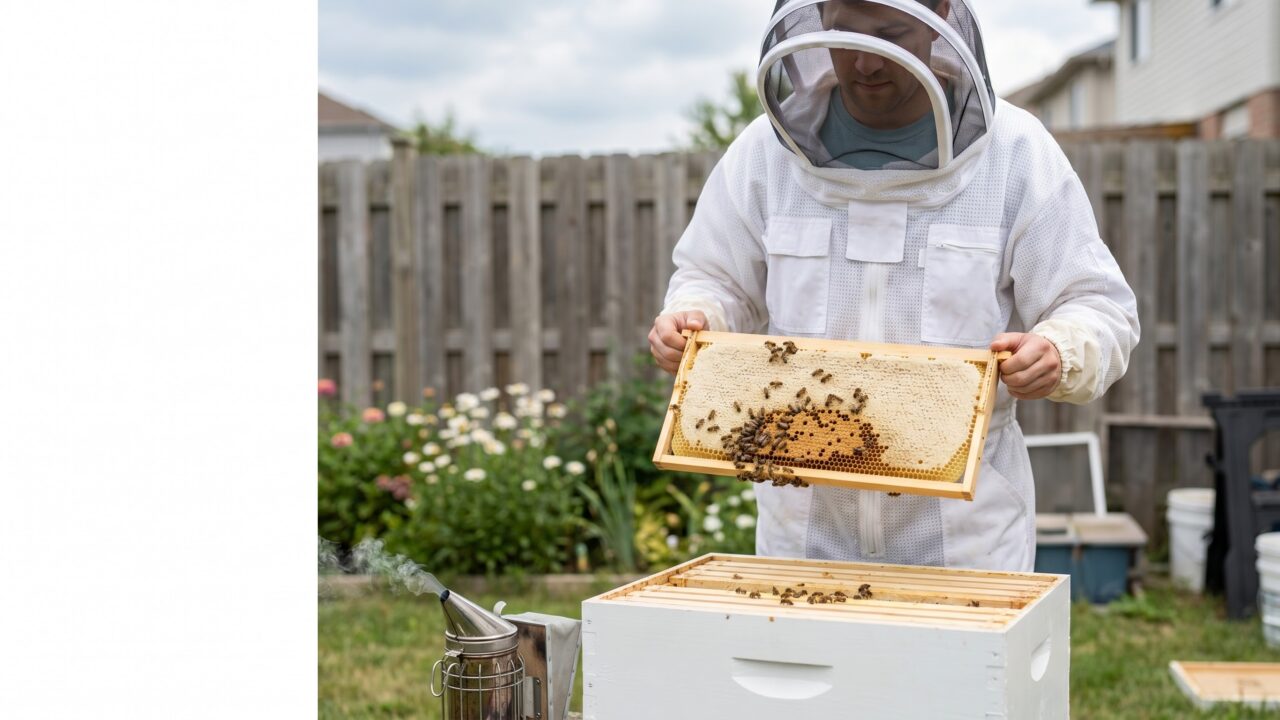
You can start beekeeping for roughly $750 to $1,500 in the first year, you will spend that first season mostly building the colony rather than collecting honey, and the single thing most likely to decide whether your bees live is a mite the size of a pinhead. That is the honest shape of this hobby. It is deeply rewarding and genuinely doable for a backyard beginner, but the popular "$150 starter kit" number describes one line on the receipt, not the whole spend. This guide walks the real roadmap so you go in clear-eyed.
Beekeeping rewards patience and steady observation more than gear or grit. Below is what it costs, what the first year actually looks like, and the decisions that matter most, with a calculator you can run on your own numbers near the bottom.
What it really costs to start
Plan for a four-figure first year if you want bees that survive it. Penn State's beekeeping guidance puts the cost of starting two colonies, including the hives, tools, and personal protection, at about $600 to $800, and that figure is before the bees themselves, before mite treatments, and before the feed a new colony usually needs. Add those and a single-hive beginner commonly lands somewhere between $750 and $1,500 all in.
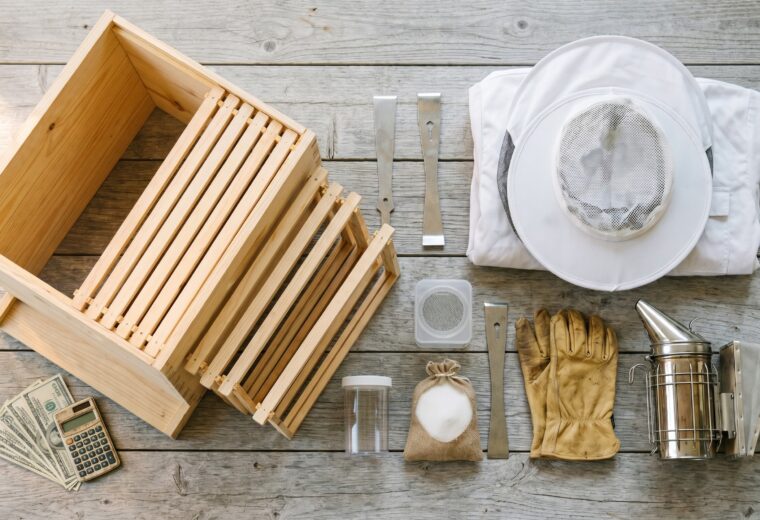
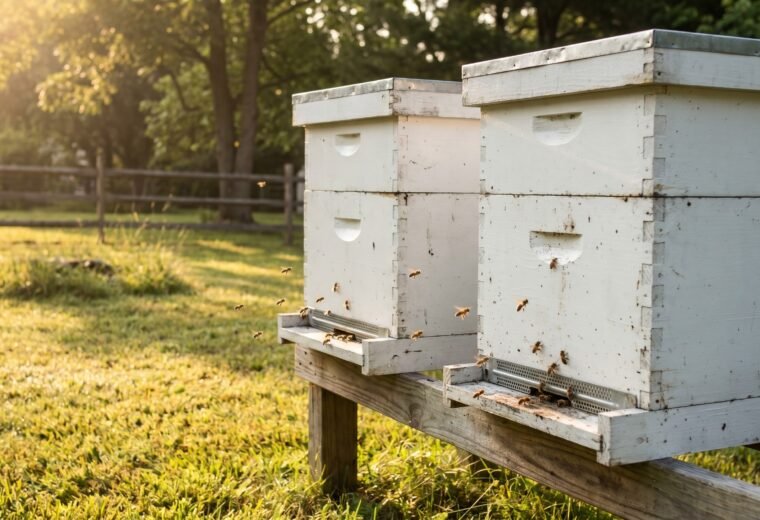
The pieces break down like this. A complete Langstroth hive, the US standard, runs about $200 to $400. Bees are a separate purchase. Protective gear, a smoker, and a hive tool add up faster than people expect. Then come the recurring costs nobody mentions in the kit listing: mite treatment, fall feed, and replacing the colony if it dies over winter (more on that below, because it is common).
One number worth correcting early: a Flow Hive, the model with the plastic frames you turn to drain honey, is not a budget shortcut. It runs about $669 to $739 from the manufacturer, and it is a real working hive that still needs inspections, mite checks, and everything else. The Flow frames change how you harvest, and that is all they change. If you want the full breakdown, there is a line-by-line tally in our cost-to-start guide, and the question of whether a cheap kit covers it is settled in the piece on the $150 starter kit.
A first-year cost calculator you can run now
Costs vary by region and how much you buy used, so plug in your own figures. These ranges reflect typical US prices; pick the point in each range that matches your plan, then add them up.
| Line item | Typical range (one hive) | Notes |
|---|---|---|
| Langstroth hive (complete) | $200 to $400 | 8-frame is lighter than 10-frame |
| Bees | $0 to $300 | Package $140-$200, nuc $180-$300, caught swarm free |
| Protective gear (suit or jacket, veil, gloves) | $60 to $200 | A full suit costs more than a jacket-and-veil |
| Smoker and hive tool | $30 to $70 | Buy a stainless smoker once |
| First-year mite treatment | $15 to $60 | One or two applications |
| Feed (sugar, feeder) | $20 to $80 | A new colony almost always needs feeding |
| Mite test kit | $10 to $30 | Skipping this is the costliest "savings" |
| First-year total | ~$335 to $1,140 per hive | Two hives roughly doubles gear-light items |
The low end of the table assumes a free swarm and a jacket in place of a full suit. The high end is closer to most beginners, who buy everything new and order a nuc. That $335 floor is the bare-minimum case, and it explains why the headline range up top sits higher. Almost no first-year beekeeper lands a free swarm and buys nothing new, so the $750 to $1,500 figure reflects the realistic path where you buy the gear you actually need. Add a second hive and the total climbs, though not by a clean double, since some gear such as the smoker, tools, and a suit carries over. That second-hive question deserves its own answer, and we work through it in the one-hive-or-two breakdown.
What the first year actually looks like
Expect little or no honey in year one. A brand-new colony spends its first season drawing comb, raising brood, and building its population from a few thousand bees to a working force. There is rarely a surplus to spare. A new hive often yields 0 to 20 lb its first year, frequently 0, while an established hive in a good year produces roughly 30 to 60 lb. If you are starting because you pictured jars of honey by August, reset that to next year.
The rhythm of the season is steadier than dramatic. You install bees in spring, feed them sugar syrup to help them draw comb, and inspect about every 7 to 10 days through the active months. Over-inspecting sets the colony back, so resist the urge to open it daily. A new colony grows toward a summer peak of up to about 60,000 bees, then contracts to a winter cluster of maybe 10,000 to 15,000. One queen drives that growth, laying as many as 2,000 eggs a day at her peak, per UF/IFAS Extension.
How hard is the work itself? Mostly it is observation and timing rather than heavy labor, though a full deep box of honey can weigh 80 to 90 lb, which is a real consideration when you choose box sizes. We lay out the honest difficulty in our look at whether beekeeping is hard for beginners.
The decision that kills the most hives
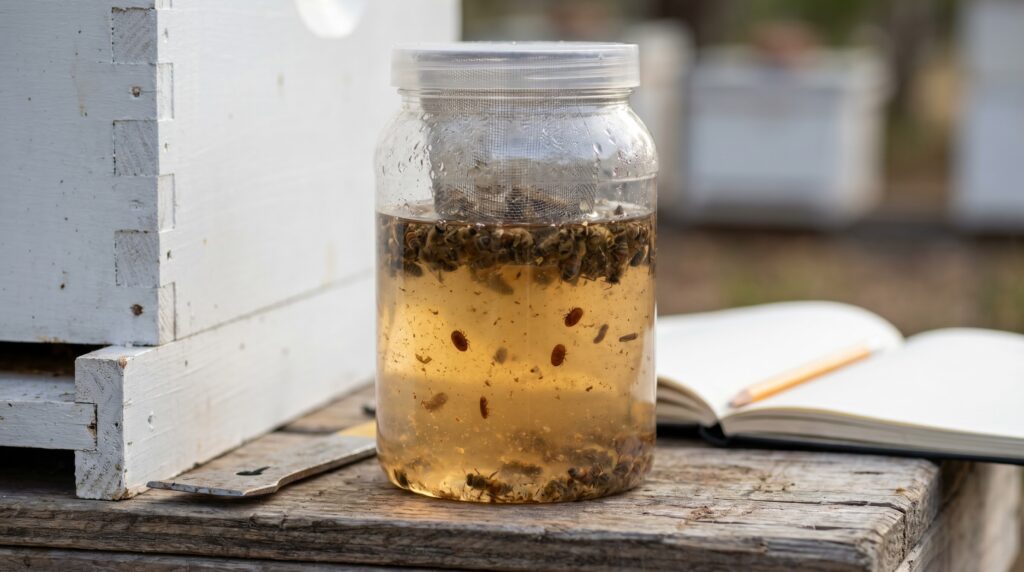
Varroa mites are the number one killer of US honey bee colonies, and ignoring them is the most common first-year failure. These reddish parasites feed on bees and brood and spread viruses that collapse a colony, usually over the colony's first winter. This is not a rare event. The 2024-2025 national survey from the Apiary Inspectors of America found US beekeepers lost an estimated 55.6% of their managed colonies, with backyard beekeepers at about 51.4%. Replacing dead-outs is a recurring cost, and untreated mites are behind a large share of those losses.
The good news is that the response is simple and learnable. You monitor, and you treat on a threshold. To monitor, you wash or sugar-roll a sample of about 300 bees (roughly a half cup) and count the mites that drop. (Some extension guides use 400 bees for a half cup; programs differ slightly on the exact count, so follow whichever your test kit specifies.) The Honey Bee Health Coalition's late-summer action threshold is about 2 mites per 100 bees, roughly 2%. Hit that, and you treat.
The critical window is late summer, before the colony rears the long-lived "winter bees" that must survive until spring. Knock the mites down then and your winter bees start life relatively clean. Treatments must always follow the label, never a guess. The Honey Bee Health Coalition's varroa guidance is the standard reference here, and our own step-by-step on running a wash and counting the drop is in our guide to testing for varroa. A quick map of the common products:
| Treatment | Honey supers on? | Key condition |
|---|---|---|
| Oxalic acid (dribble or vapor) | Allowed | Works best when the colony is broodless; PPE required |
| Formic acid (Formic Pro) | Allowed | Temperature-sensitive, roughly 50 to 85 F; can reach mites in capped brood |
| Amitraz (Apivar) | Supers OFF | Remove before honey supers go on |
| Thymol (Apiguard) | Supers OFF | Temperature-dependent gel |
Chemical dosing, timing, and safety are decisions for the product label and your local extension service, not for guesswork. Per Cooperative Extension guidance, formic acid products and oxalic acid may be used with honey supers on, while amitraz must be off the hive before supers go on.
How you get your bees
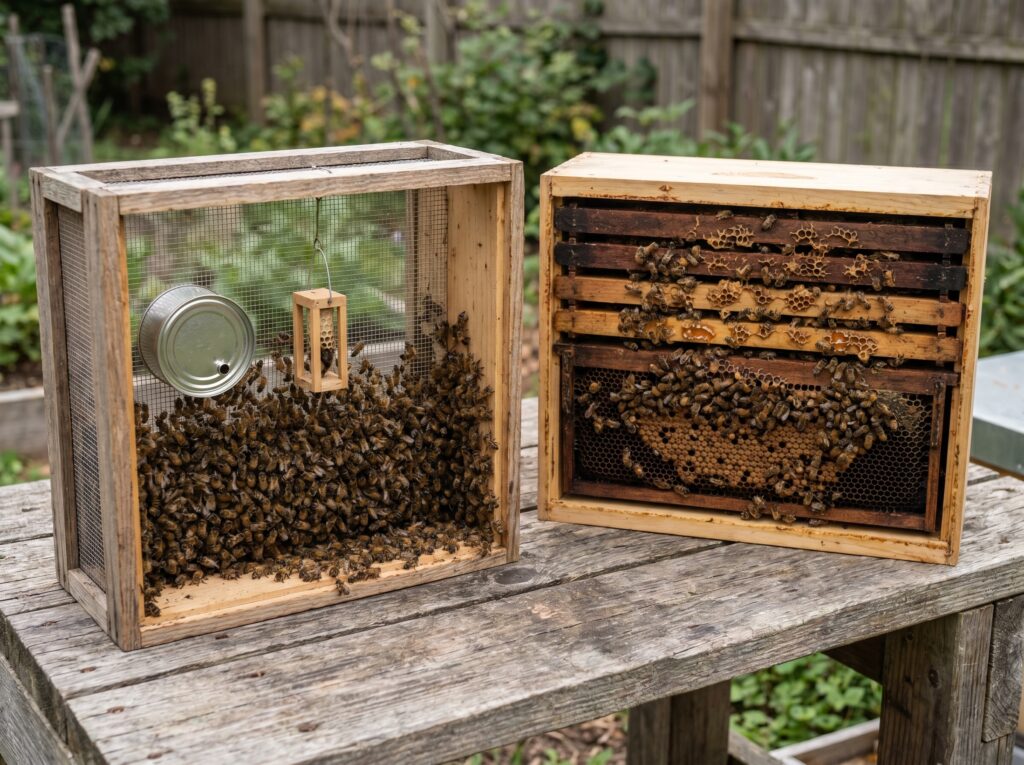
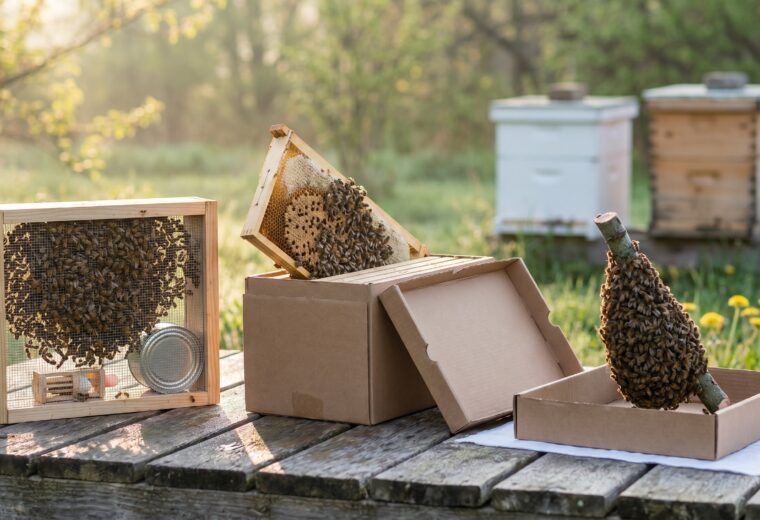
You have three honest options, and the choice shapes your whole first season. A package is a screened box of loose bees, about 3 lb, or roughly 10,000 of them, shipped with a separately caged queen and no comb at all. That starting force is small on purpose. The queen multiplies it over the season, growing the colony toward its summer peak, and the whole thing runs about $140 to $200. A nuc, short for nucleus colony, is a small working hive: usually five frames of drawn comb with a laying queen, brood, and food already going. It is a head start, costs about $180 to $300, and is local pickup only. A swarm you catch is free, but unpredictable.
Two things trip up beginners here. First, bees are a winter purchase for spring delivery. Penn State's guidance is to place the order by early winter for early-spring bees, because good suppliers sell out. Second, a nuc usually builds faster than a package because it skips the slow comb-drawing start. The full comparison, including how to vet a seller, is in our guide to buying bees.
Choosing a hive and how many to keep
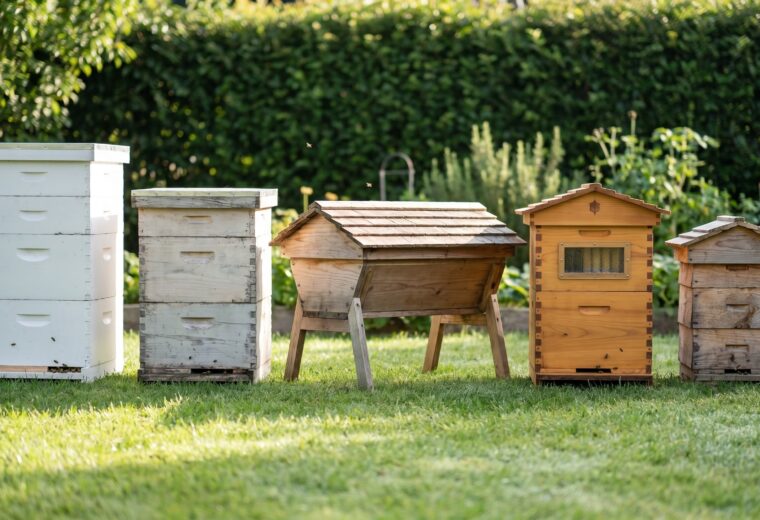
Start with a Langstroth hive unless you have a specific reason not to. It is the US standard, parts are interchangeable across brands, and nearly every guide and mentor assumes it. A complete kit runs about $200 to $400. An 8-frame box is noticeably lighter than a 10-frame, which matters once it fills with honey. Top-bar and Flow hives exist and have their fans, and we compare the families honestly in the rundown of hive types.
On colony count, two hives beats one for a beginner, even though it costs more. With two, you can compare a healthy colony against a struggling one and borrow a frame of brood to rescue a queenless hive. Penn State's guidance to start with two or three colonies reflects that. The trade-off is cost and time, which is the heart of the one-or-two decision.
What winter does, and why it matters from day one
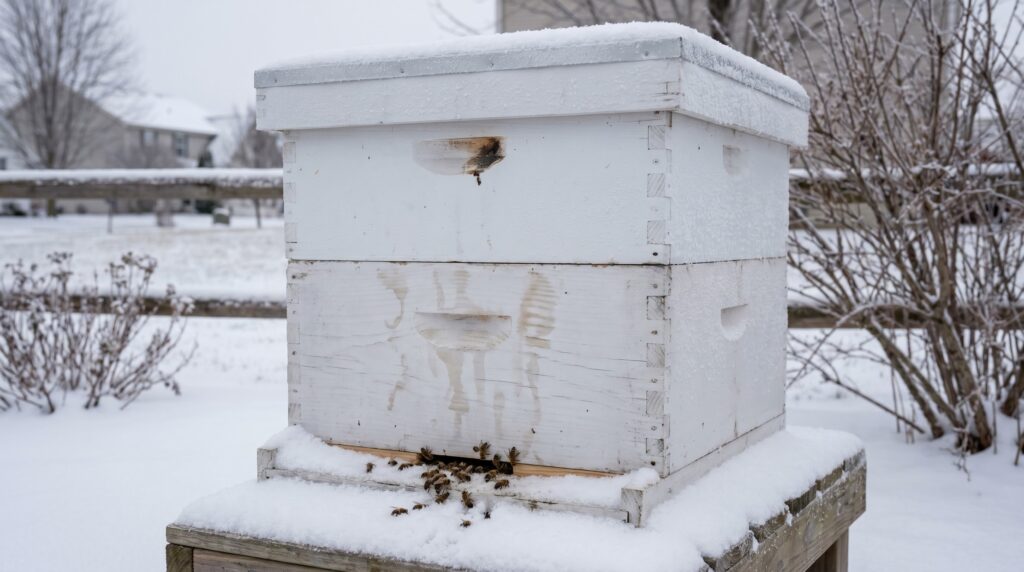
Bees do not hibernate. They cluster, shiver to make heat, and eat through stored honey until spring. Most winter dead-outs trace to three things more than cold itself: varroa, starvation, and moisture. Cornell's pollinator program puts the food math plainly: a full-size hive (two deep boxes) needs a minimum of about 80 lb of honey to get through winter, and a nuc no less than 50 lb. Depending on region, beekeepers commonly aim for 70 to 90 lb.
Moisture is the quiet one. Bees give off water vapor as they cluster, and if it condenses on a cold inner cover and drips back down, wet bees in cold weather die fast. That is why ventilation matters more than heavy wrapping for most backyard hives. This winter chain is exactly why mite control in late summer is so urgent: clean bees, full stores, and a dry hive are what carry a colony to spring.
A note on stings and safety
You will get stung. A normal sting brings local pain, swelling, and redness that fades in a day or two. That is expected and not an allergy. A severe, systemic reaction is different and rare: trouble breathing, swelling of the tongue or throat, dizziness, or hives spreading across the body. The Cleveland Clinic is clear that those signs call for emergency care: contact 911 or get to an emergency room immediately, and use a prescribed epinephrine auto-injector if you have one. If you have never been stung or have a known venom allergy, talk to an allergist before you start. This guide covers husbandry and buying decisions, not medical advice.
None of this should scare you off. Beekeeping is one of the most absorbing things you can do in a backyard, and the learning curve is friendly if you respect the mites and the calendar. Order bees in winter, start with a Langstroth, learn to wash for mites by mid-summer, and leave your colony enough honey for the cold. Do those four things and you are ahead of most first-year beekeepers.
Questions answered
How much does it cost to start beekeeping the first year?
Plan for about $750 to $1,500 all in for one hive. If you want to bring the number down, the woodenware is where used gear saves the most: a sound second-hand Langstroth box and a stainless smoker can cut the hive line by half with no downside, while the items worth buying new are the ones touching your safety and your bees, namely the veil, gloves, and mite treatments. Skip bargain-hunting on those. The "$150 starter kit" is one line, not the total.
Will I get honey in my first year?
Usually little or none, and the honest signal to watch is not the calendar but the comb: a surplus is only coming once the bees have fully drawn out the brood boxes and you add a honey super that they begin filling and capping. Until every brood frame is built and laid up, the colony will store nectar for itself, not for you. If you reach late summer with a full second box and a started super, year two looks promising; if not, leave it all for winter.
Should I start with one hive or two?
Two is better for beginners because a second colony is your reference and your spare-parts kit. The cheapest way to run two without doubling the spend is to skip a second package and instead split your first hive once it is strong, or buy a single nuc and divide it, so you pay for bees once and let the colony make the second queen. The gear that carries over (smoker, suit, tools) means the real extra cost of hive two is mostly a second box.
Is varroa really that important for a beginner?
Yes. Varroa mites are the leading cause of US colony loss, and untreated mites kill most first-year hives over winter. Learn to monitor a roughly 300-bee sample and treat when you hit about 2 mites per 100 bees, with the key knockdown in late summer before winter bees are reared.
- Penn State (M. López-Uribe Lab), "Beekeeping, where to begin"used for start-up cost of two colonies and the winter-order-for-spring timing
- Honey Bee Health Coalition, "Tools for Varroa Management"used for the 300-bee sample and the late-summer action threshold
- Mississippi State University Extension, "Managing Varroa Mites in Honey Bee Colonies"used for not treating while winter bees are reared
- Cornell CALS Pollinator Network, "Overwintering"used for winter honey-store minimums and the moisture/condensation risk
- Apiary Inspectors of America, 2024-2025 Colony Loss Surveyused for the US and backyard annual colony-loss rates
- Cleveland Clinic, "Bee Sting"used for normal versus severe sting reactions and when to seek emergency care