Reading brood patterns: what solid looks like, and what spotty means
Learn to read honey bee brood patterns at a glance. Know what solid, healthy brood looks like, why spotty or shotgun patterns appear, and when to act.
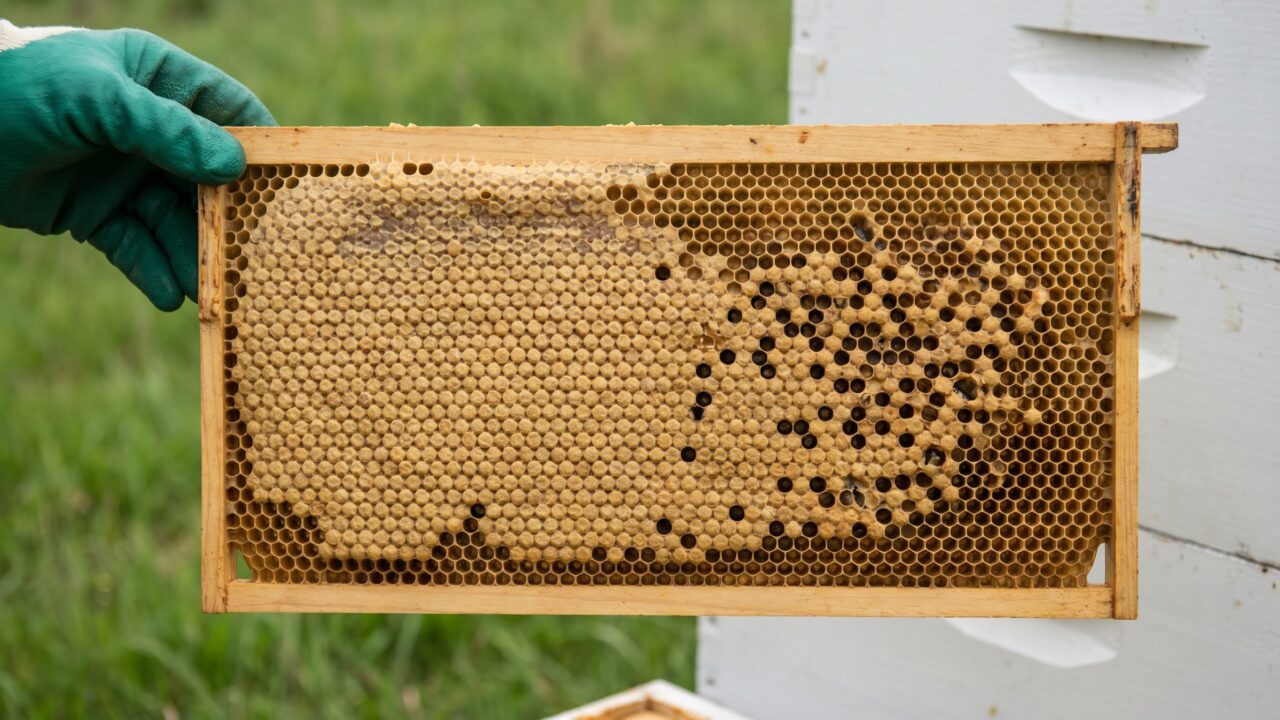
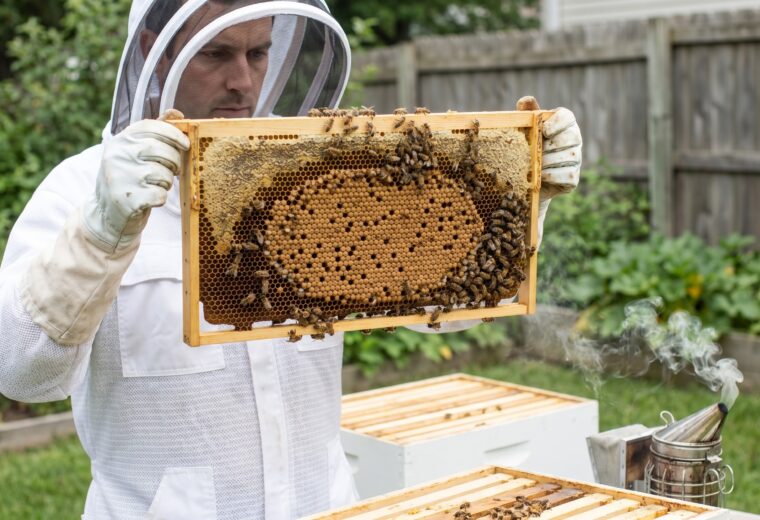
Pull a frame of brood from an active colony in mid-summer and you may see a pattern so tight and regular it almost looks printed: golden-capped cells packed edge to edge across several thousand cells, with only a ring of nectar or pollen framing the edge. That pattern is the first and fastest signal of colony health. Before you look for eggs, before you hunt the queen, before you count mites. You read the brood.
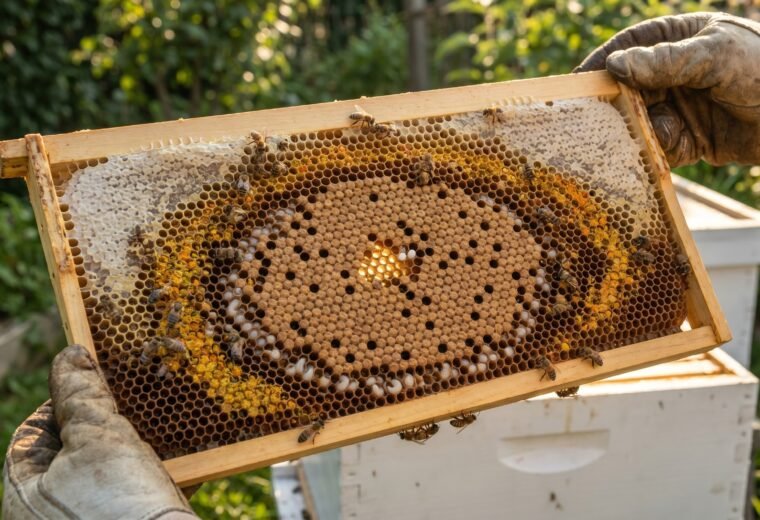
A strong, settled queen covering 70 to 80 percent of available cells in a solid arc tells you the colony is functioning. A frame that looks like Swiss cheese (empty cells scattered randomly through capped brood, some cells capped and some gaping open) tells you something is wrong. The hard part is figuring out what. Queen failure, disease, varroa, and even highly hygienic genetics can all produce a spotty pattern, and the response to each is different.
What a solid brood pattern actually looks like
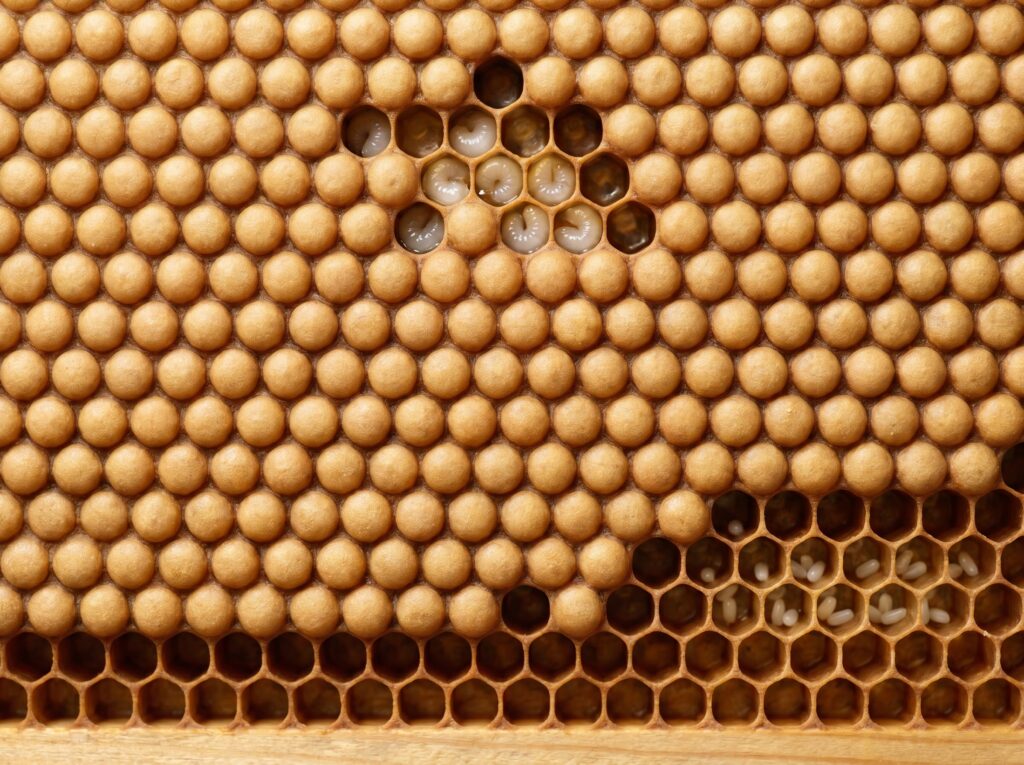
Healthy worker brood caps are convex, smooth, and the color of light toffee, sometimes called "biscuit-colored" in older literature. Up close, the texture is slightly granular, never sunken in the middle. The cells sit in tight hexagonal rows. In a well-mated queen's work, 80 percent or more of the cells on the face of a frame will be capped brood, with the remainder a mix of eggs, open larvae in various stages of development, and a border of pollen and honey. You will see a few open cells within the brood area; queens skip a cell occasionally, and workers sometimes remove a dead egg or failing larva before it caps. Two or three open cells per hundred capped is unremarkable.
Colony size matters to what "solid" means in practice. A package installed in April may field only a few hundred capped cells in its first frame during week two. That sparse coverage is normal for a new colony still drawing comb. It is not a sign of trouble. A colony headed by a proven queen in its second year should cover most of both faces of a deep frame with brood by late spring, sometimes spilling into a second or third frame. Watch the trend, not just the snapshot.
Worker brood takes 21 days from egg to the day the adult bee chews out. The three-day egg stage, five to six days of open larval development, and 12 to 13 days capped. Drone brood caps are noticeably more domed (bullet-shaped, higher than worker caps) and take 24 days. During a hive inspection, the relative proportion of eggs, open larvae, and capped brood tells you roughly when the queen last laid in that area of the frame. If you see mostly capped brood with few eggs, she was active there about two weeks ago; if you see eggs standing like tiny grains of rice at the bottom of open cells, she was there within the last three days. That timeline is covered in more detail in our guide to reading a frame.
Spotty and shotgun brood: the diagnostic table
A spotty or "shotgun" pattern (scattered empty cells spread through capped brood, some cells sunken or discolored) is not a single diagnosis. It is a symptom with several possible causes. The table below organizes the most common culprits by what you actually see when you open the hive.
| What you see | Most likely cause | Cappings | Larva/cell odor | Action |
|---|---|---|---|---|
| Many empty cells throughout capped brood; no obvious cell damage; queen seen recently | Hygienic bees removing diseased/infested brood; or new queen still ramping up | Normal color, intact | None | Check for eggs; confirm queen is laying; run an alcohol wash for mites |
| Scattered open cells with sunken, greasy, or perforated dark-brown cappings; few eggs | American foulbrood (AFB) | Sunken, dark, often punctured | Sulphurous or rotting smell; dead larva threads 3-5 cm (ropiness test) | Do not treat; contact your state apiarist immediately. AFB is notifiable in most states |
| Open cells with yellow-brown larvae; larvae appear "melted" in cell; most larvae die before capping | European foulbrood (EFB) | Absent on most infected cells; larvae die pre-capping (~90%) | Sour smell; ropiness thread under 1.5 cm | Contact state apiarist; EFB may resolve in a strong colony but lab confirmation is wise |
| Hard chalk-like white or grey-black pellets visible in or ejected from cells; scattered empty cells | Chalkbrood (Ascosphaera apis) | Some uncapped; mummies visible | None | Improve ventilation; reduce moisture; often self-resolves in warm weather; consider requeening if persistent |
| Scattered sunken or perforated cappings; larvae found with head raised, banana-shaped, in a fluid-filled sac | Sacbrood virus | Sunken, discolored, sometimes perforated | Mild to none | Usually self-limiting; strong colonies recover; persistent cases suggest requeening |
| Bald brood (cappings chewed off by mites); scattered neglected-looking cells; bees emerging with deformed or crumpled wings | Varroa destructor (Parasitic Mite Syndrome) | Sunken or chewed | None specific to brood | Run an alcohol wash immediately; treat if at or above 2 mites per 100 bees (~2%) |
| Large areas of empty cells; queen present but brood coverage below 40%; eggs present but many missing | Failing or poorly mated queen | Normal on what is capped | None | Assess queen; count eggs vs empty cells; consider requeening |
Queen quality and what the brood pattern tells you
A queen's value to the colony is partly genetic and partly physiological. A well-mated queen, mated with 12 or more drones on her mating flights, carries enough sperm to fertilize eggs for two to five years. A poorly mated queen, or one that has been physically damaged, runs out of stored sperm faster. The result is a frame that drifts from solid to shotgun over the course of weeks, then shifts to mostly drone brood as she runs dry and can only lay unfertilized eggs.
Walk through what you are seeing methodically. First, establish whether eggs are present. Eggs standing in the base of cells confirm the queen laid in the last 72 hours, which is the fastest possible sanity check. For a full walkthrough of the egg-spotting process, the inspection notes at how to inspect a beehive cover frame-by-frame technique. Second, once you find eggs, count how many cells around each egg cluster are empty. A few empties in a large brood area is normal. Empties outnumbering filled cells in the same zone is not.
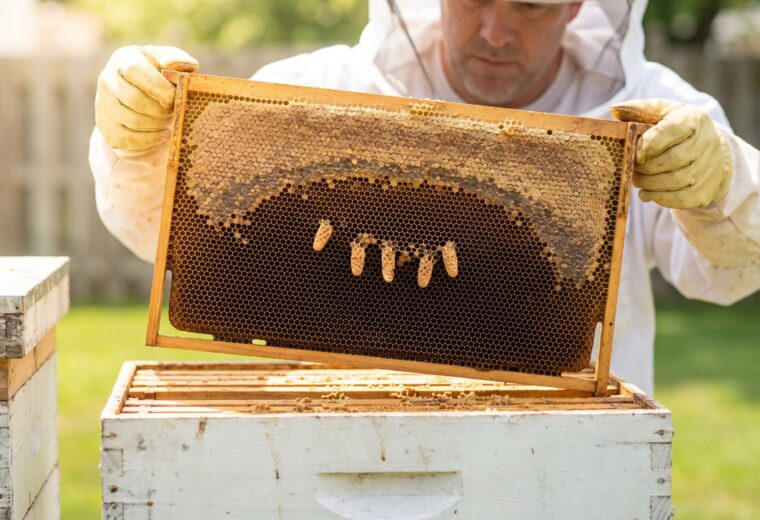
A common beginner misread: a recently requeened colony often shows light brood coverage for two to three weeks after the new queen begins laying. She starts slowly, covering only part of one frame, and the pattern may look thin even though she is perfectly functional. Give her three weeks from first observed laying before drawing conclusions. A problem queen shows worsening coverage over time, not stable light coverage that expands as she settles in.
Another misread worth flagging: worker bees with strong hygienic behavior remove diseased or mite-infested pupae before they cap or shortly after. This creates empty cells that look exactly like poor queen performance. If your mite count is high and the pattern is spotty, the spotty pattern is more likely a varroa problem than a queen problem; treating the mites often tightens the brood back up within a cycle or two. Our article on is my hive queenless goes through the full decision tree for separating a laying-worker colony from a queenless one from a failing-queen scenario.
Disease vs hygienic behavior: making the call in the field
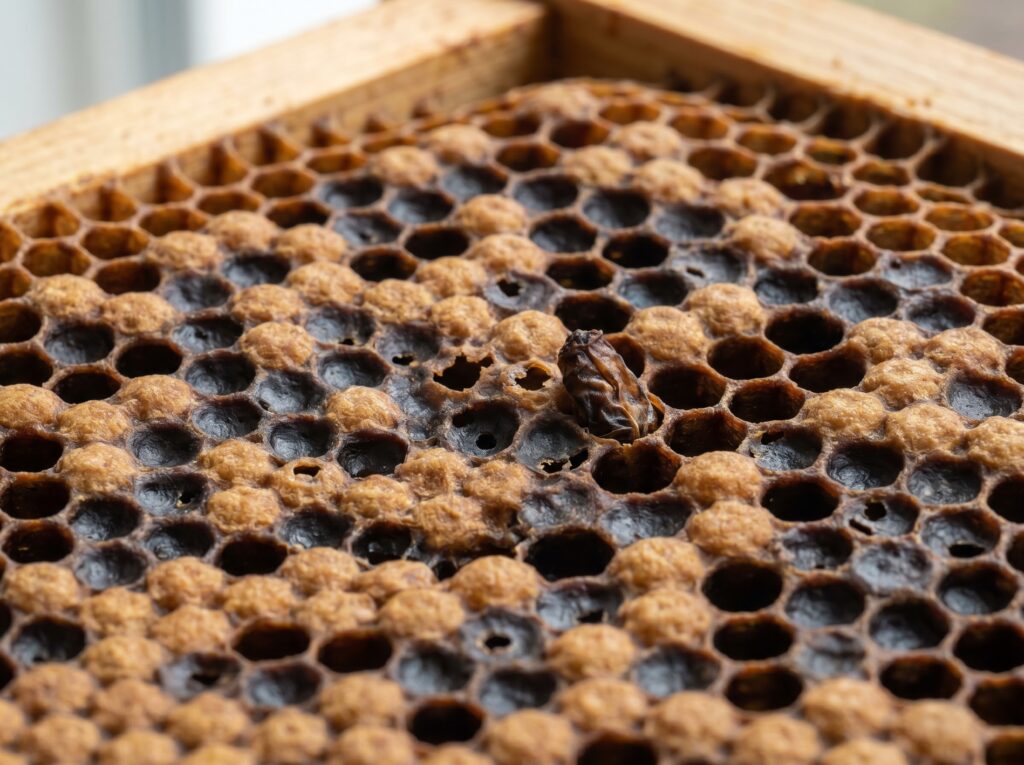
Hygienic bees and sick bees can look nearly identical on the frame, and this creates the most common mistake in brood-pattern reading. A colony of highly hygienic bees, selected for the ability to detect and remove diseased or varroa-infested pupae quickly, will produce a noticeably spotty pattern during peak disease or mite pressure. The bees are doing exactly the right thing. The pattern is a byproduct of their effectiveness, not a sign that the colony is failing.
The difference lies in three details: the condition of the cells, the smell, and the mite count.
Cell condition: In a hygienic colony, the empty cells are clean. A bee chewed out the cap, removed the pupa or larva, and the cell is now empty and intact, ready to be refilled. In a disease colony, the capping is often collapsed inward, dark, perforated, or greasy. Pull the cap with a toothpick and look inside. A healthy-colony empty cell has no residue. An AFB-infected cell has a brown, pasty remnant that strings 3-5 cm when you push a matchstick in and pull it out slowly. BeeAware Australia, drawing on research compiled by Plant Health Australia, describes this as pulling "a 3-5 cm long dark-brown ropy thread" for AFB, compared to a short thread under 1.5 cm for EFB.
Smell: AFB has a characteristic sulphurous odor. EFB smells sour. Chalkbrood and sacbrood have little or no odor. A colony with hygienic bees removing varroa-infested brood smells like beeswax, propolis, and warm comb. No unpleasant note whatsoever.
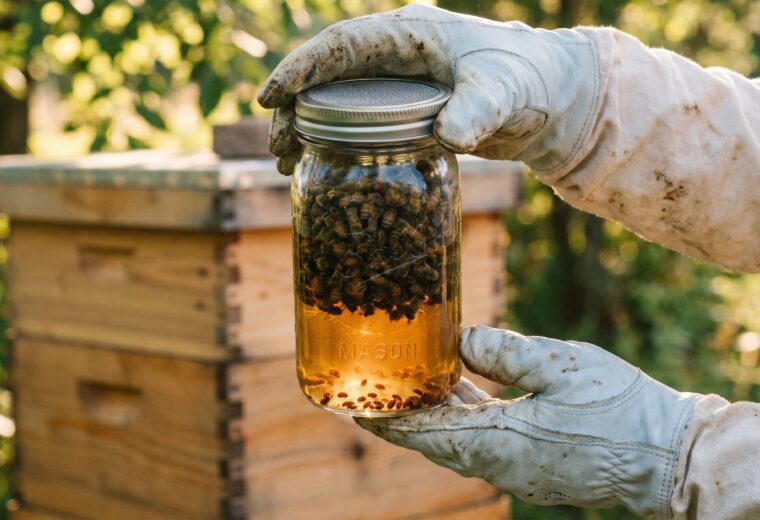
Mite count: Run an alcohol wash on a sample of about 300 bees (roughly a half-cup) from the brood area. The Honey Bee Health Coalition's 2026 guidelines (Tools for Varroa Management, 8th/9th edition) set the action threshold at 2 mites per 100 bees (2%) during the July-October period and in early spring, specifically to protect the long-lived winter bee cohort. Above that number, varroa is likely driving any spotty pattern you see. Below it, look elsewhere. More on testing methods at varroa mite thresholds.
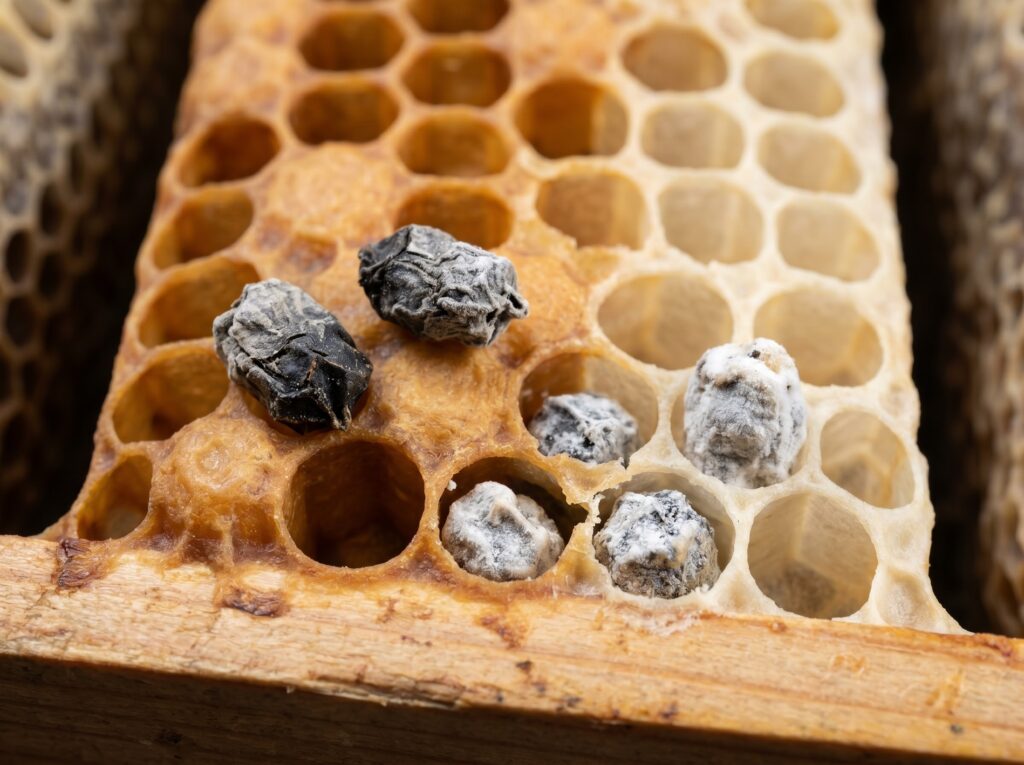
Chalkbrood mummies are diagnostic on their own. A white to grey-black hard pellet found inside an open cell, or a pile of them on the landing board, is Ascosphaera apis fungus. There is nothing else it looks like. Per BeeAware, these mummies transition "from a white to grey-black colour" as the spores mature. The grey-black ones are fully sporulated and most infectious. Chalkbrood rarely kills a strong colony outright; BeeAware describes it as an infection that "rarely kills infected colonies but can weaken it." It signals that the colony is under stress, usually from cool and damp conditions or restricted ventilation.
When to act, and on what timeline
Spotty brood is a signal, not an emergency in most cases. Here is how to prioritize.
Act same day: any ropiness test that pulls a thread 3 cm or longer, any capping that is dark and sunken with a sulphurous odor, or any combination of signs you cannot explain. AFB spores remain viable in old equipment for 50 years or more. If AFB is confirmed or strongly suspected, your state apiarist needs to know; it is a reportable disease in most states, and treating it yourself without official guidance is not the right move. Our article on laying worker signs covers the related scenario where an otherwise healthy-looking colony has no queen and workers begin laying unfertilized eggs.
Act within a week: mite count at or above 2%. Varroa, left unchecked, builds up in the sealed brood over a 3-4 year progression toward colony death. The critical treatment window is late summer, before the colony begins rearing the long-lived winter bees that will carry the hive through cold months. Wait too long and you treat into the wrong brood cycle. For treatment options and timing, see our varroa mite thresholds page.
Monitor for two to three weeks: chalkbrood, sacbrood, or a spotty pattern in a recently requeened colony. These often resolve without intervention as the colony strengthens or weather warms. Keep an eye on the trend. If coverage worsens week over week, move toward requeening.
No action beyond continued observation: a few empty cells in an otherwise tight brood frame with normal capping color, no odor, and a low mite count. You are probably seeing normal brood turnover, hygienic bees doing their job, or a queen that simply skipped a cell.
One calibration note worth keeping: a brood pattern from a colony in early spring after a long winter often looks worse than it is. The queen ramps up slowly, and the first frames she fills may have gaps left by workers that died before new bees emerged. Give a spring colony two to three weeks of warm weather before you draw conclusions about queen quality. By late May in most of the US, a well-headed colony should be covering several frames solidly.
Questions answered
What does a brood pattern look like with a failing queen?
Coverage drops steadily over several inspections. You will see large empty patches within the brood area, very few eggs relative to capped cells, and eventually mostly drone brood as she shifts to unfertilized eggs. The cappings on what is there look normal; the failure is in the quantity and placement, not the capping condition. A single spotty frame is not enough to condemn a queen; look at two or three frames across two visits a week apart.
Can a spotty brood pattern be a sign of a good thing?
Yes. Highly hygienic bees remove diseased or varroa-infested brood quickly, leaving clean empty cells. In colonies with strong hygienic behavior, this can look very similar to disease-driven spotty brood. The diagnostic difference is that hygienic-colony cells are clean and odor-free. Run a mite count; if mites are low and the cells are intact, your bees are probably working correctly.
Should I requeen a colony with spotty brood?
Only after you have ruled out mites, disease, and new-queen adjustment period. Requeening a colony with a high varroa load and a decent queen changes nothing; the mites will still damage brood and the new queen will produce the same spotty pattern. Treat the mites first. If spotty brood persists through two full brood cycles after treatment with a confirmed low mite count and no sign of disease, then a queen assessment makes sense.
How long does a brood cycle take?
A worker takes 21 days from egg to adult bee: three days as an egg, about five to six as an open larva, and 12 to 13 capped. A queen emerges in 16 days; a drone takes 24. This means a frame of predominantly capped brood will turn over completely in about 12 to 13 days once the queen has moved on. If you mark a frame and come back in two weeks, the capped cells you saw should be open, with new eggs present if the queen returned to lay.
What is bald brood and is it dangerous?
Bald brood describes capped cells where the wax has been partially chewed away, exposing the pupa inside. Varroa mites reproducing inside those cells are the most common cause. Worker bees detect and chew the capping as they try to remove infested pupae. Small hive beetles and moth larvae can also chew cappings, but the pattern looks different. Bald brood scattered through worker brood in summer is a strong flag to run an alcohol wash and check your mite count before the next inspection.
- BeeAware (Plant Health Australia)used for AFB identification: irregular/patchy brood, sunken dark cappings, ropiness test (3-5 cm AFB vs under 1.5 cm EFB), spore viability, sulphurous odor
- BeeAware (Plant Health Australia)used for EFB identification: patchy brood with uncapped cells, larvae die pre-capping (~90%), molten appearance, rubbery loosely-stuck scales
- BeeAware (Plant Health Australia)used for chalkbrood identification: scattered brood pattern, chalk-white to grey-black mummies, spore viability 15 years, spring/cool-weather seasonality, rarely kills colonies
- BeeAware (Plant Health Australia)used for sacbrood identification and varroa/Parasitic Mite Syndrome: scattered brood, bald brood, chewed cappings, deformed wing virus symptoms, varroa reproductive biology on drone vs worker brood
- Honey Bee Health CoalitionTools for Varroa Management (2026, 8th/9th edition) - used for varroa action threshold: 2 mites per 100 bees (2%) during July-October and early spring to protect winter bee cohort
- VarroaVaultsummary of HBHC 2026 Varroa guidelines confirming the 2% threshold and noting that the previous 3% figure has been superseded
- UF/IFAS ENY173/IN1257University of Florida IFAS Extension Varroa quantification guide