Winter feeding bees: why syrup stops working and what to use instead
When cold hits, syrup can harm or go ignored. Learn why fondant, dry sugar, and candy boards keep colonies alive through winter - and how to read your stores.
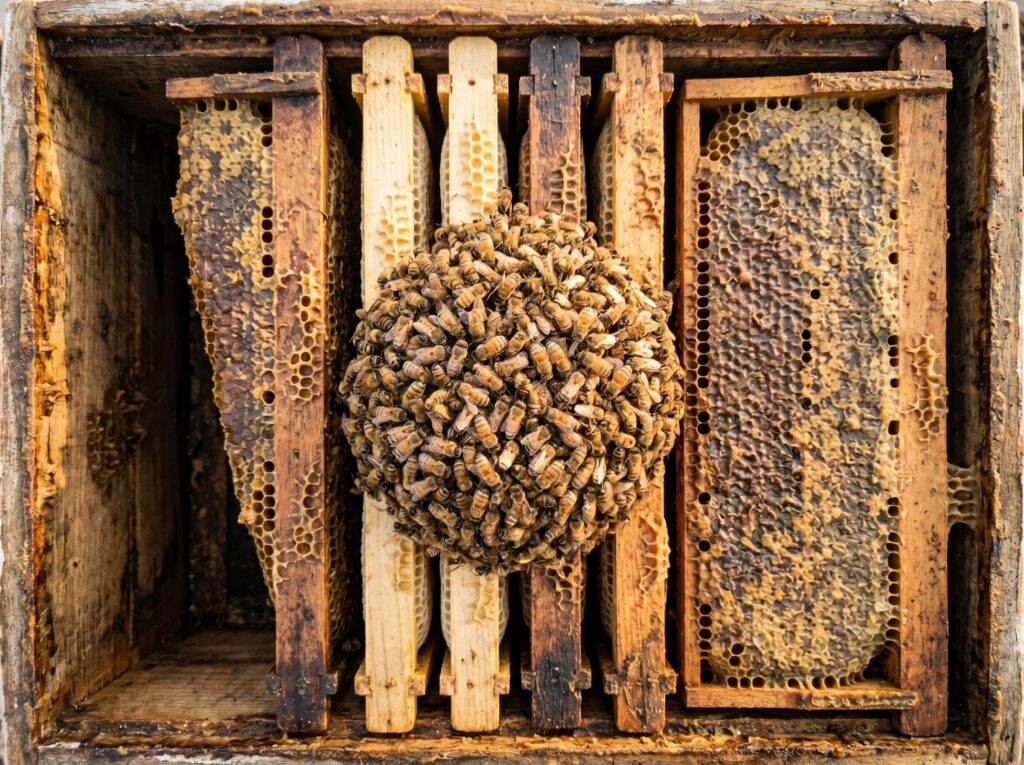
At around 57°F inside the hive - a threshold documented by the Mid-Atlantic Apiculture Research and Extension Consortium at the University of Delaware - honey bees pull together into a tight winter cluster and stay there. They are not hibernating. They are burning through their honey stores, vibrating their flight muscles to generate heat, and moving slowly upward through the frames as the food above them disappears. Nothing about that picture accommodates liquid feed. Syrup sits cold, goes untouched, chills the bees that approach it, and adds moisture to a space that already has too much. Once clustering begins, as Cornell's overwintering guide notes, "it is too late to feed your bees liquid feed." What you can do from that point on is solid feed: fondant, dry granulated sugar, or a candy board. Each one serves a slightly different situation, and knowing when to use which saves colonies.
Why syrup fails in cold weather
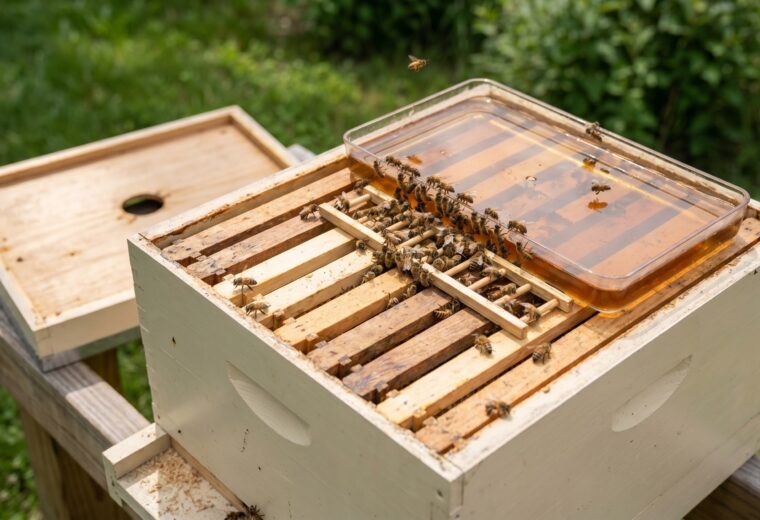
Syrup is mostly water. A standard 2:1 fall mix (two parts sugar, one part water by weight) is still roughly a third water by weight, and bees have to evaporate that water before they can store the sugar as food. Mississippi State University Extension's seasonal management guide identifies the specific problem: "Feeding syrup in extremely cold weather can chill honey bees because they need to evaporate water (which draws away heat from the cluster) from the syrup to convert it to honey." Pull heat away from a winter cluster and you are working against the colony's survival, not supporting it.
Alabama Cooperative Extension draws a practical line at 50°F: liquid feed is appropriate only above that temperature. Below it, a clustered bee will not travel far from the warm center of the cluster to reach a feeder. She may not reach it at all. And if she does, the syrup sitting in a cold feeder is below the temperature her digestive system handles well.
The subtler trap is isolation starvation. A cluster moves vertically as it eats through stores - upward through the frames, frame by frame. It does not spread sideways during cold spells. University of Delaware MAAREC's seasonal cycles document describes what can happen: "An extremely prolonged cold spell can prohibit cluster movement, and the bees may starve to death only inches away from honey." Frames of capped honey just to the left and right of the cluster are completely inaccessible. This is the specific geometry that solid winter feeds solve: place them directly above the cluster and the bees can reach them the moment they need to.
For the mechanics of fall syrup - what ratio to use, when to start, and how much to feed before temperatures drop - the syrup ratios guide covers the 2:1 fall standard and why it differs from the spring 1:1 mix. The full timeline for transitioning from syrup to solid feed in autumn is in the fall feeding guide.
Reading your stores before the cluster forms
Solid emergency feeding in midwinter is possible. But preventing the emergency is better. The window for assessing stores and correcting shortfalls with syrup closes when overnight lows stay below 50°F, which in much of the northern US means the last reliable opportunity is late September into October. Cornell University's overwintering guide and Mississippi State's seasonal management publication give slightly different target weights, and both are worth knowing:
| Hive type | Minimum honey going into winter | Target by October 1 (Cornell, Northeast) | If light in fall: action |
|---|---|---|---|
| Full colony, two-deep Langstroth | 80 lb (Cornell); 60-65 lb positioned above cluster (MS State) | 70-90 lb | Feed 2:1 syrup aggressively through late September |
| Nucleus colony (5-frame nuc) | 50 lb minimum (Cornell) | Assess by September; combine or feed heavily | Feed 2:1 syrup; consider combining with a stronger colony |
| Any configuration, late winter (Feb-Mar) | Retain at least 30 lb through March (MS State) | Not applicable - use solid feed if low | Fondant or candy board directly above cluster, same day |
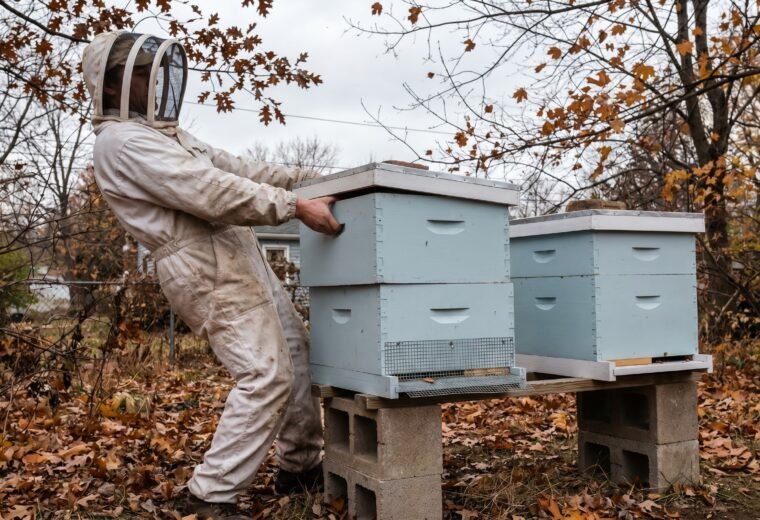
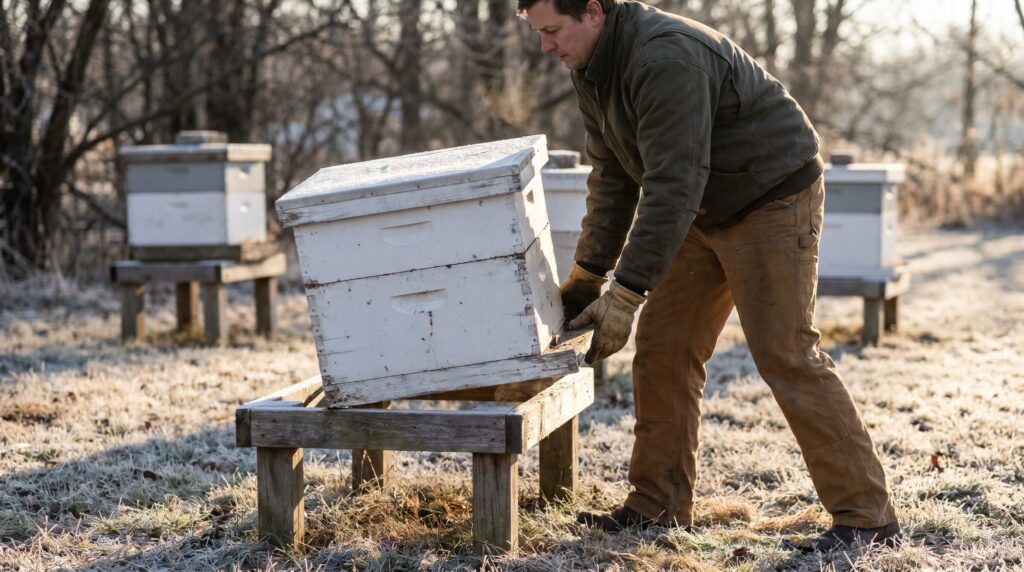
The lift test is how you check stores without opening the hive. Stand behind the hive, get both hands under the rear edge of the bottom board, and tilt it back a few inches. Note that this technique requires the hive to be on a stand elevated off the ground - on a ground-level pallet the angle is too low to get useful leverage or feel. A two-deep hive with full winter stores is heavy - 80 or more pounds of honey spread across the frames, on top of the hive furniture weight. If you can lift it easily with two fingers at the rear, it is running light. A fully capped standard deep frame holds roughly five to seven pounds of honey (extension and manufacturer sources converge near six pounds), so a two-deep hive with adequate stores should feel like you are tipping back something that does not want to move.
Do this check monthly from November through January, then weekly through March as brood rearing picks back up and consumption accelerates. The winterizing guide covers where to position honey frames in the fall so the heaviest stores sit above and beside the eventual cluster location.
Fondant, dry sugar, and candy boards: what each one does
All three options deliver sucrose in a form bees can access without needing to evaporate water. The differences come down to preparation, how long the feed lasts, and how much the bees absorb the surrounding moisture - which matters for hive ventilation.
Fondant
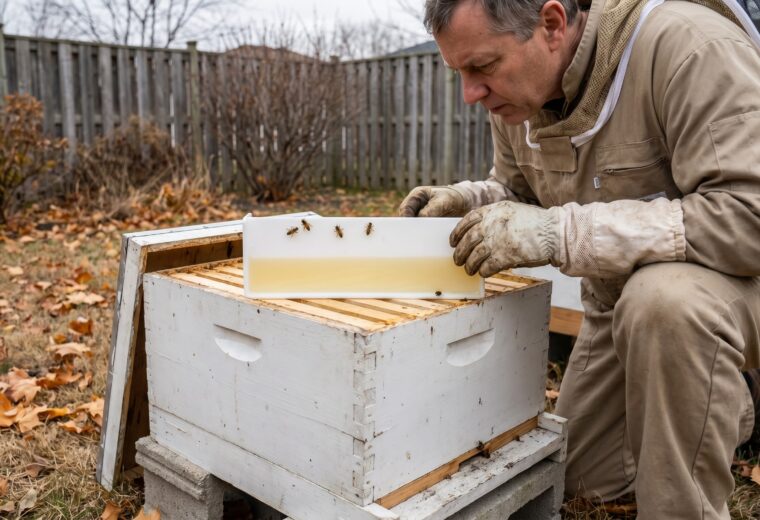
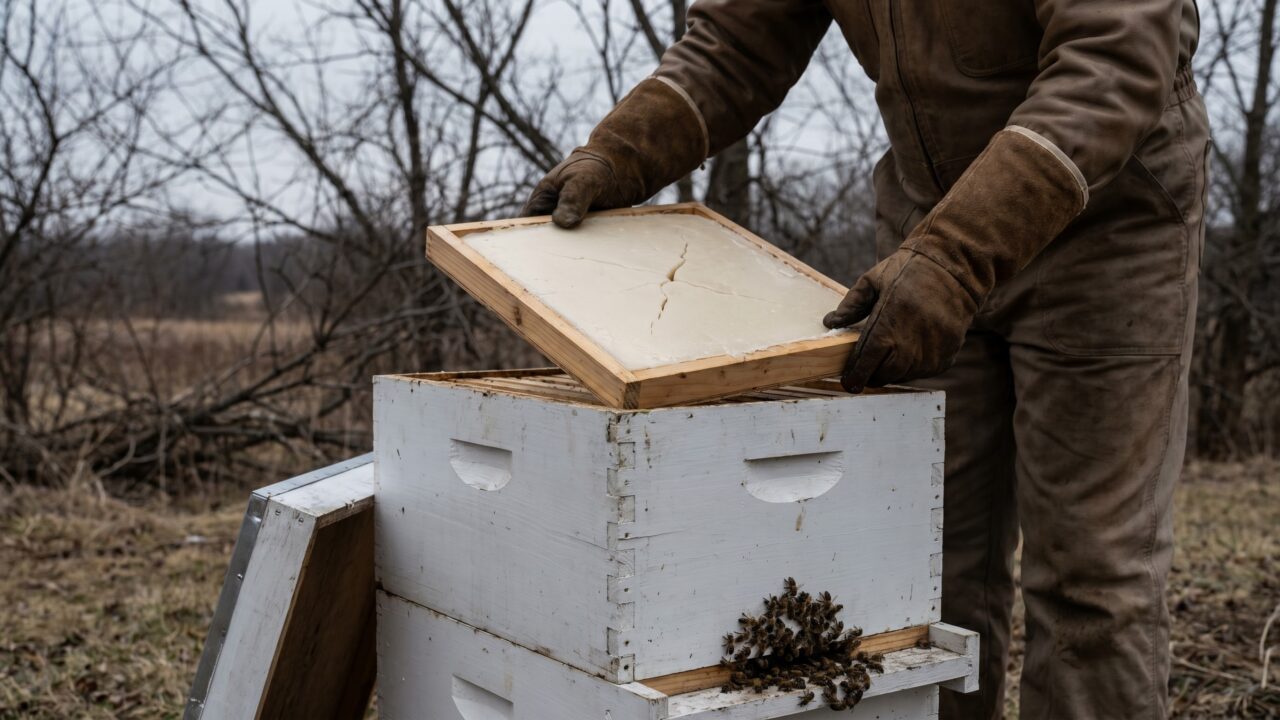
Fondant is cooked sucrose: sugar and water heated until the water drives off, then stirred or beaten as it cools so it sets into a dense, slightly pliable block rather than rock-hard candy. The low moisture content makes it shelf-stable above the cluster for several weeks. Alabama Cooperative Extension's winter fondant recipe uses two cups of granulated sugar, two tablespoons of corn syrup (which resists crystallization), and 1.5 cups of boiling water, combined and poured onto wax paper to set overnight. It goes directly on the top bars in the uppermost brood box, thin enough for the lid to close, or on top of honey supers using a feeding shim.
One important caution for anyone making fondant at home: overheating sucrose produces hydroxymethylfurfural (HMF), a compound toxic to bees at elevated concentrations. A 2018 peer-reviewed study published in Chemistry Central Journal (Shapla et al., Chem Cent J 2018;12:35) found that sugar solutions with HMF in the range of 30-150 mg/kg caused 15-58.7% mortality in caged bees within 20 days. Commercial cake fondant - the kind sold for decorating - is made at higher temperatures and sometimes with citric acid, both of which raise HMF levels. Use fondant formulated for bees, or make your own and keep a candy thermometer in the pot. The sugar should stay white; yellowing is a sign of caramelization and excess heat.
Dry sugar (mountain camp method)
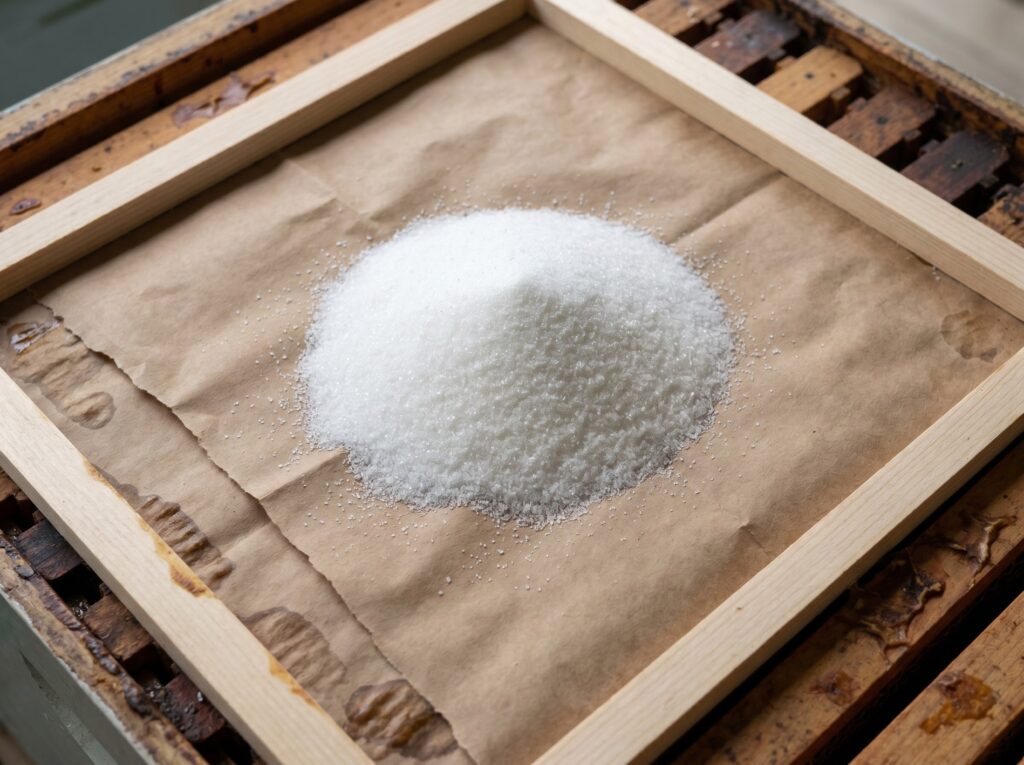
No cooking, no waiting overnight, and you can do it in under two minutes on the coldest day of the year. Lay a sheet of newspaper over the top bars of the uppermost box. Add a thin wooden shim (a 3/4-inch spacer frame) for clearance. Pour two to four pounds of plain granulated white sugar directly onto the newspaper, forming a low mound. The respiration moisture inside a winter hive is enough to soften the sugar surface so bees can eat it. Sugar is also hygroscopic - it absorbs moisture from the air - so this method doubles as a passive moisture management tool. Winter condensation dripping onto a cluster is genuinely dangerous, and anything that pulls moisture upward and out of the cluster zone reduces that risk.
Dry sugar does not last as long as a full candy board, and it can bridge and harden in patches. Check it every two to three weeks during February and March, and replenish when you can see the newspaper again through the sugar.
Candy boards
A candy board is a wooden frame the same footprint as your hive body, filled with a cast block of hard candy. Mississippi State's seasonal management guide describes the design: "The hard candy is poured into a modified lid that has an upper entrance, and when the candy hardens, the candy board is placed on top of the hive." When the winter cluster eats through its stored frames and reaches the lid, the candy is directly above it. As the guide notes, "If the winter cluster reaches the lid by eating through most of the stored honey, the candy is within reach and can save the bees from starvation." A standard 10-frame candy board from major suppliers typically holds eight to fourteen pounds of hard candy; 8-frame versions hold somewhat less, so actual capacity varies by your hive's frame count. Installed in November, a full board often lasts through February without a mid-winter replacement - though duration varies with cluster size and whether brood rearing starts early - which means fewer hive openings in cold weather.
Many beekeepers in the northern tier of the US install candy boards as a standard part of fall close-up, not as emergency response. The board also provides an upper entrance, which improves winter ventilation without a significant temperature loss. You can buy them pre-made from most major beekeeping suppliers, or cast your own using the same cooked fondant process, poured into a built shim frame and allowed to set solid. Either way, the same HMF caution from the fondant section applies to the cooking process.
Adding feed once the cluster has formed
Every full hive opening in cold weather is a disruption. Cold air rushes in, the cluster tightens, and the bees spend energy recovering heat they did not need to spend. The goal when adding winter feed is to minimize how much of the hive gets exposed.
Illinois Extension recommends waiting for a day near 50°F if you can. That said, a candy board or dry sugar shim can be added without a full inspection on any day: lift the outer cover, lay the shim with the feed on the top bars, replace the cover. The cluster stays intact below and the operation takes under a minute. That approach is workable at 20-25°F if you move deliberately and have everything staged before you open the cover.
Placement is the one variable that actually changes the outcome. The feed must sit centered directly above where the cluster is located, which is almost always centered on the top frames of the upper brood box. Feed placed off to one side will not be reached during cold weather, for the same reason honey on the flanking frames goes uneaten during isolation starvation. Center it. That is the whole rule.
Alabama Cooperative Extension recommends replenishing supplemental stores every two weeks or as needed through late winter. The period from mid-January through the end of March carries the highest starvation risk, according to Mississippi State's seasonal guide, because brood rearing has resumed and the colony's demand for carbohydrates has climbed sharply while no forage is available yet. A hive that managed comfortably on its natural stores through December can be in real trouble by late February if brood rearing started early and the cluster is large.
Recognizing a colony that is running out
A light hive on the lift test is the clearest signal. If the rear tilts up without resistance, feed that day. No need to open it fully first.
Two other signs are useful on days above 50°F when you can observe the entrance: the absence of cleansing flights when temperatures would normally allow them, and an unusual quiet when you press your ear to the hive side and knock. A healthy clustered colony produces a brief, audible buzz when disturbed. No sound, or something thin and scattered, suggests a very small cluster or a dead-out.
If a hive is clearly starving - cluster pressed against the inner cover, little or no response when knocked - add fondant or a dry sugar shim the same day without waiting for warmer conditions. On a day above 50°F, you can also carefully move one capped honey frame from the side of the hive to a position centered directly above the cluster. Move only one frame, close up within 60 seconds, and do not attempt this below 50°F. A cold, already-stressed cluster can be chilled or broken apart by even brief exposure to cold air, which accelerates the problem rather than fixing it.
The complete feeding guide covers all feeding methods across the full season, including spring and summer contexts where the options are broader and the timeline is less urgent.
Questions answered
Can I use granulated sugar from the grocery store for winter feeding?
Yes. Plain white granulated cane or beet sugar is the standard for both dry-sugar and cooked-fondant winter feeds. Avoid raw sugar, brown sugar, and powdered sugar - the molasses content and additives in unrefined forms can cause dysentery in bees during winter when cleansing flights are infrequent. Corn syrup in small amounts (as in fondant recipes) is fine at the proportions used.
How much dry sugar or fondant should I add at one time?
Two to four pounds of dry sugar at a time is typical for the mountain camp method. A cast candy board holds eight to fourteen pounds of hard candy for a standard 10-frame setup (less for 8-frame versions), which can last six to eight weeks depending on cluster size and how aggressively the colony is rearing brood. In February and March when brood rearing accelerates, check every two weeks and replenish when the board is more than half consumed.
Will adding a candy board in winter stimulate early swarming?
No. Swarming is driven by colony population, congestion, and queen reproductive cycles in late spring - not by sugar availability in January or February. Emergency winter feed does not trigger it. The greater risk in the other direction: a colony that starves down to a small cluster by March emerges weak into the buildup season, which sets back the whole year.
What is the difference between bee fondant and baking fondant?
The chemistry is similar - both are cooked sucrose - but baking fondant is often made at higher temperatures and may contain citric acid or other additives that increase HMF concentration. HMF is toxic to bees at elevated levels. Use fondant made specifically for bees, or make your own using a simple recipe. Target the soft-ball stage on a candy thermometer (around 234-238 degrees F); most bee-fondant recipes treat anything above that as a caramelization risk and a sign to pull the pot from heat. The article body covers HMF in detail in the fondant section.
- Cornell University CALS Pollinator Networkused for winter store requirements (80 lb minimum for two-deep hives, 50 lb for nucs), cluster formation temperature, and cold-weather syrup cutoff
- Mississippi State University Extensionused for syrup chilling mechanism, candy board design, late-winter starvation risk (mid-January through March), and minimum store thresholds
- Alabama Cooperative Extension Systemused for 50°F liquid-feed threshold, fondant recipe, two-week replenishment schedule, and feeding shim placement
- University of Delaware MAARECused for 57°F cluster formation temperature and isolation starvation description
- Shapla UM et al., Chemistry Central Journal 2018;12:35 (BioMed Central / PMC)used for HMF toxicity to honey bees and lethal concentration data
- Oklahoma State University Extensionused for honey per deep frame (approximately 6 lb per fully capped standard deep frame; accepted range 5-7 lb); Dadant and Mann Lake manufacturer specifications corroborate this consensus