Best beekeeping starter kits by budget tier and which to actually buy
Cross-brand beekeeping starter kit picks at $150, $250, and $400, what each includes and omits, assembly difficulty, and which tier to actually buy.
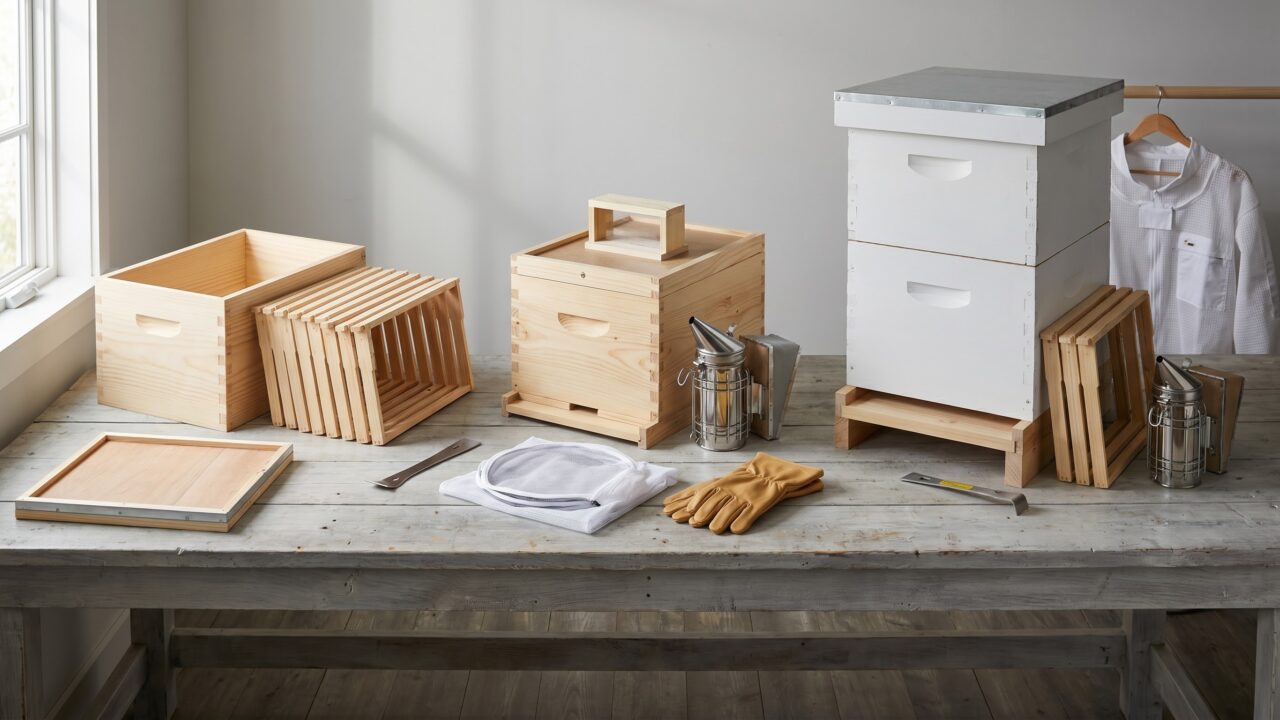
If you want one answer before the details: most new beekeepers are best served by a complete Langstroth kit in the $250 range, not the $150 bargain box and not the $400 deluxe one. The $150 tier usually gives you a hive and almost nothing to work it with. The $400 tier adds a second box and a real suit you would have bought anyway. The middle tier covers the woodenware plus the tools and protection you actually open a hive with, which is why it is the one to start from. Below is what each price level genuinely includes, what it quietly leaves out, how hard each is to put together, and the picks that hold up.
One framing note first. A starter kit is the gear, not the whole hobby. The bees are a separate purchase, and so is the first season of mite control and feed. We size up the full first-year bill in what it really costs to get into beekeeping. Here we are only weighing the kits themselves.
What a "starter kit" actually means at each price
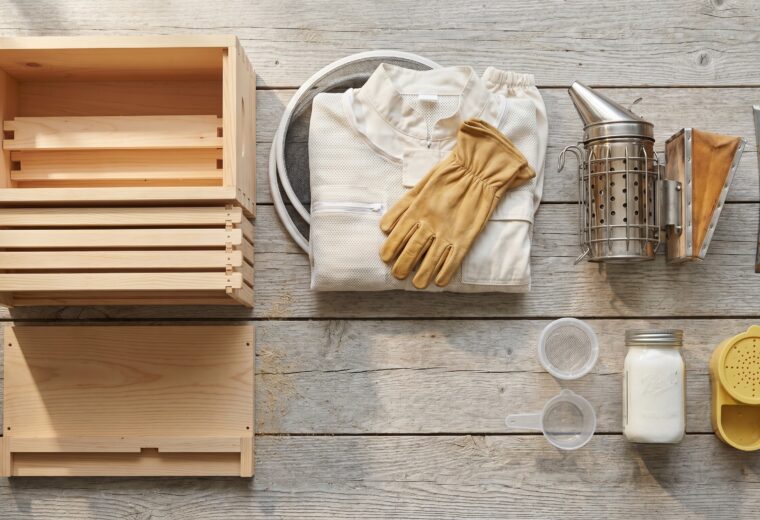
The phrase covers three very different boxes, and the price tells you which one you are looking at. At the bottom, a kit is mostly woodenware. In the middle, it is woodenware plus the basic tools and protection. At the top, it is a fuller hive with a second box and better gear. Almost every kit on the US market is a Langstroth, the standard hive Oklahoma State Extension calls one of the most popular for its ease of use. That standardization is good news for you: parts from different brands mostly interchange, so a kit is a starting point you keep building on rather than a sealed package.
Here is the honest contents map across the three tiers. Read the omissions column more carefully than the inclusions one, because that is where the real cost hides.
| Tier | Typically includes | Typically omits | What the omission costs you |
|---|---|---|---|
| About $150 (entry) | One deep brood box, 10 frames with foundation, bottom board, inner and telescoping covers, an entrance reducer. Sometimes a single thin glove pair. | Suit or jacket, smoker, hive tool, feeder, mite-test gear, any second box. | You cannot safely open the hive on day one. Add roughly $130 to $200 in tools and protection before you can work it. |
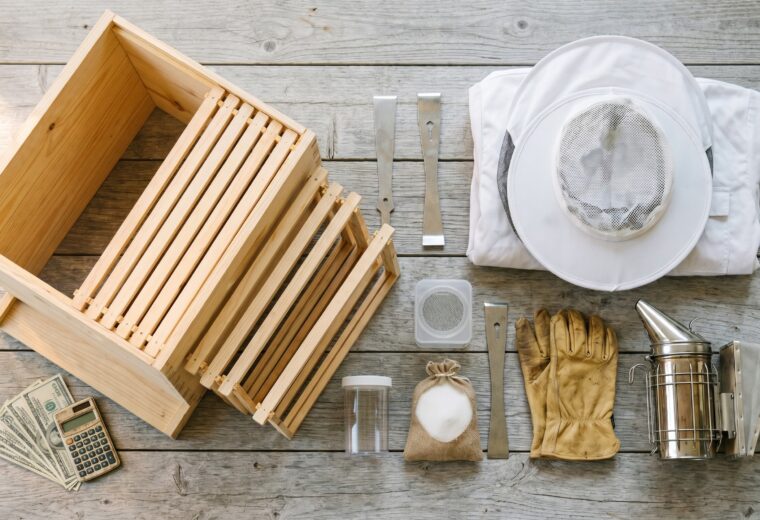
| About $250 (complete) | Everything above, plus a smoker, a hive tool, a veil or jacket, gloves, and usually a feeder. Some add a frame grip or bee brush. | A second brood box, a full ventilated suit, a mite-test cup, and treatment. | Small gaps. You will want a second box within weeks and a mite-test cup before late summer, together about $35 to $90. |
| About $400 (deluxe) | Two boxes (often a deep plus a medium super), a full suit, all hand tools, a feeder, and frequently extra frames or a stand. | Bees, mite treatment, an extractor. | Least to add. The risk here is paying for a premium suit or extra box you could have sourced cheaper separately. |
Notice what no kit at any price includes: the bees, and the mite control that keeps them alive. Those two are never in the box, and the second one is the difference between a hive that survives the winter and a dead-out you re-buy in spring.
The hidden line in every cheap kit
Entry kits look like the obvious deal until you price what is missing. OSU's own beginner budget puts bare-minimum equipment at $458, totaling about $520 by year's end, and that figure assumes you bought the tools and protection a $150 box leaves out. So the $150 is not a discount on $520; it is the first $150 of it. Buy the cheap box and you are still spending the rest, just in separate orders, often at higher single-item prices than a bundle would charge.
What each tier is genuinely good for
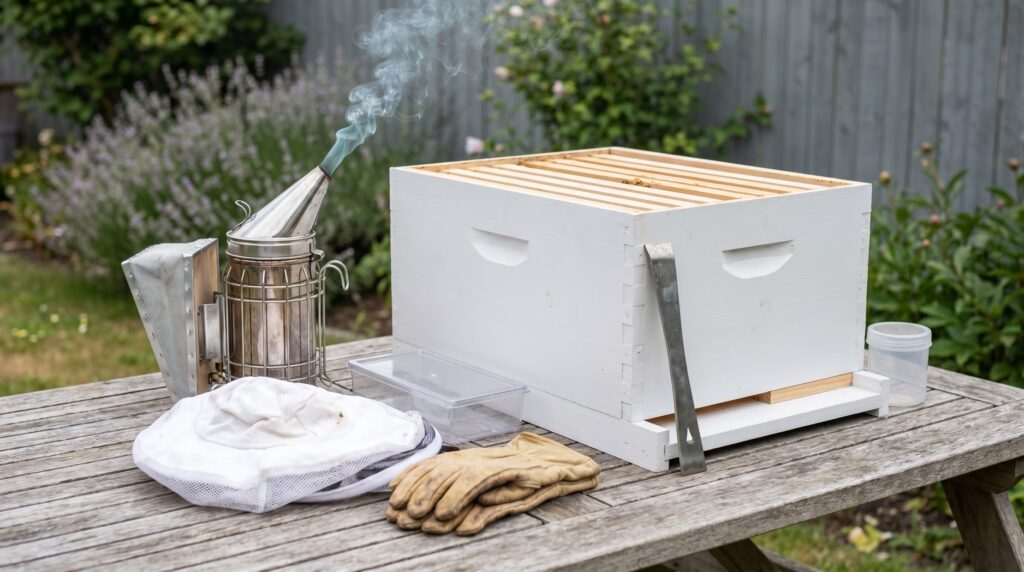
Price aside, each tier fits a different buyer, and matching the buyer to the box matters more than shaving $40.
The $150 entry kit makes sense in two cases: you already own a suit and tools from another hobby or a mentor's spare bin, or you are a hands-on builder who plans to add hardware piece by piece and likes choosing each item. For anyone else it is a false start. You will stand in the yard on bee day holding a box you cannot open because nothing protects your face and nothing pries the frames apart.
The $250 complete kit is the right default for a first-year beekeeper with no gear. It is built so that the day your bees arrive, you can suit up, light the smoker, and install them without a second order. The gaps it leaves, a second box and a mite-test cup, are things you add on a known schedule rather than scramble for. This is the tier we point most beginners toward.
The $400 deluxe kit fits the buyer who knows they want two hives eventually, or who would rather pay once for a full suit and a second box than assemble the pieces. Our own bias is toward starting with two colonies where budget allows, because a second hive gives you a healthy reference to compare against and a backup if one fails. We weigh that choice in full in whether to start with one hive or two. That backup matters more than it used to, given how high US losses have run lately: the national survey reported over 1.1 million colonies lost in 2024-2025. Just confirm you are not paying a premium for a branded suit you could match for less. We compare suit styles and fit in our rundown of bee suits worth wearing.
Assembly: how hard is the box you just bought
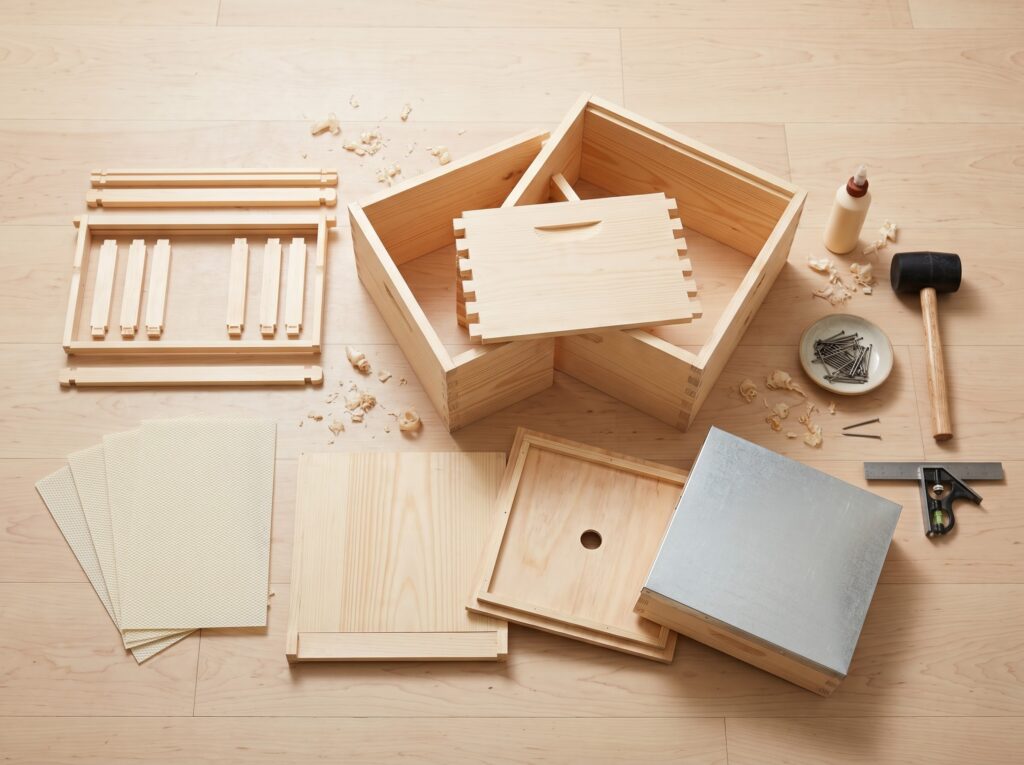
Most kits ship as flat, unassembled pine, and "assembly" means two real jobs: building the woodenware and finishing it. Neither is hard, but both take longer than new beekeepers expect, and the finishing step has a deadline.
Building is glue-and-nail work. Box corners arrive as interlocking finger joints; you spread wood glue, fit them square, and drive nails or screws. Frames are fiddlier: 10 per box, each a few small parts, plus pressing foundation in. Budget an evening for a single-box kit and most of a weekend for a two-box deluxe. A rubber mallet, wood glue, a small square, and a hammer or drill cover it. Some premium kits arrive pre-assembled or use snap-together plastic that skips this entirely, which is part of what the top tier buys.
Finishing is the step beginners skip and regret. Hive boxes are untreated pine and need paint on the outer surfaces to last, in white or a pale color so they do not overheat, and only on the outside where bees will not walk. The catch is timing: OSU advises that all painting be done two to three weeks before the bees arrive so the paint cures and gases off. Order and build early. A kit that shows up the week your bees do leaves you installing a colony into raw, smelly, wet-painted wood.
One small relief: the plastic foundation in most kits comes pre-waxed to coax the bees into drawing comb, and many beekeepers brush on extra beeswax to help. That is the one part of assembly the bees finish for you.
Use this to pick a tier in five questions
Skip the brand hype and answer these. Your answers point to one tier, and the goal is to match the box to how you will actually use it.
- Do you already own a suit, smoker, and hive tool? Yes points to the $150 box. No moves you up to $250.
- Do you want one hive or two to start? Two pushes you to the $400 tier or to buying a second $250 kit, which often costs about the same and gives you twice the tools.
- Will you put it together yourself? Comfortable with glue and a mallet, any tier works. Want it ready to go, pay up for pre-assembled at the top tier.
- Is there a local bee club or supplier? Yes means you can buy a $150 box and fill the gaps locally, sometimes used and cheap. No means a complete $250 bundle saves you chasing parts.
- Are you sure you will stick with it? Unsure, start at $250, the lowest tier you can actually work a hive with, so you are not out $400 if it does not take.
Run those and the pattern is plain. The $250 complete kit wins for most first-year beekeepers because it is the cheapest box you can open a hive with safely and completely. The $150 only wins if you already have gear, and the $400 only wins if you are committed to two hives or to never touching a glue bottle. For the full shopping list behind any tier, item by item, see our complete first-year equipment list, and if the rock-bottom option is tempting, we stress-test it in whether a $150 starter kit is really enough.
The two things no kit includes, and why they matter most
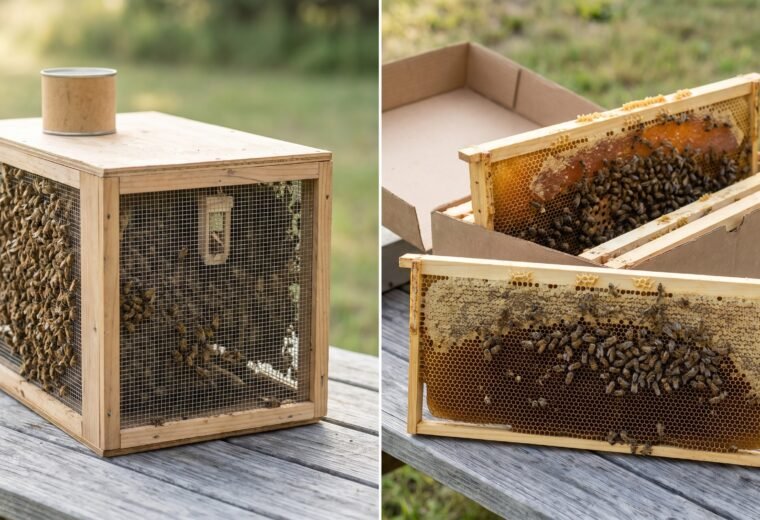
The bees come separately, and they are a winter purchase for a spring pickup. Suppliers take reservations around January, per OSU, and a package (loose bees plus a caged queen, no comb) runs cheaper than a nuc (a small working hive on three to five frames of drawn comb with a laying queen). Order your kit and your bees in the same planning session in late fall or early winter, because both sell out.
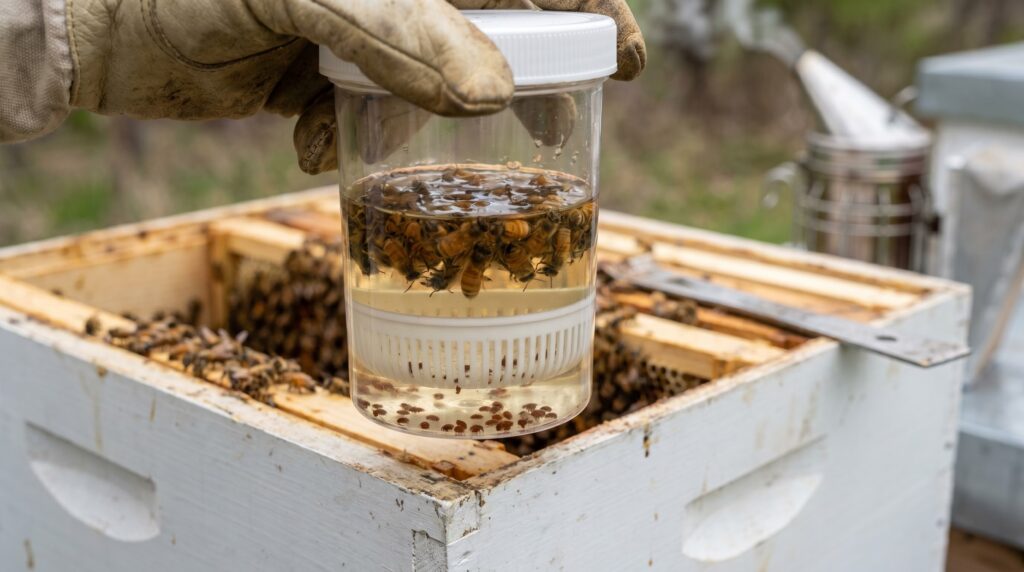
The second omission is the one that actually decides whether your money was well spent: varroa control. The varroa mite is a primary cause of honey bee colony death, according to the University of Minnesota Bee Lab, and the 2024-2025 losses were severe enough that the national survey reported over 1.1 million colonies lost. No starter kit includes a mite-test cup or treatment, yet skipping them is the most common and most expensive beginner mistake. The fix is cheap. You sample about 300 bees, a half cup, in an alcohol wash, and the Bee Lab's guidance is to keep mites below roughly 2 percent and treat promptly above it, with the critical knockdown done before the colony rears its winter bees. A test cup costs about $30, which is the best value of anything you will buy this year. We line up the options in our comparison of varroa treatments.
Two boundaries to respect, because they are not kit decisions. Chemical treatment choices and dosing follow the product label and the Honey Bee Health Coalition, never guesswork. And if a sting ever brings on anything past mild local swelling, trouble breathing, swelling away from the sting, or faintness, treat it as a medical emergency and get care, because sting allergy is a real risk that a beginner should know before the first hive day. We cover the warning signs in what to know about bee sting allergy.
Questions answered
Can I mix parts from different brands of starter kit?
Mostly yes, as long as they are the same Langstroth size. A 10-frame deep from one brand seats frames, covers, and bottom boards from another, since the standard sets the inside dimensions. The two things to match are frame style (Langstroth deep, medium, or shallow) and box width (8-frame versus 10-frame), because those are not cross-compatible. Within one size, swapping brands to fill a gap is normal and cheaper than buying a whole second branded kit.
Do kits come with plastic or wax foundation, and does it matter?
Most US kits ship with plastic foundation, which is sturdier, faster to install, and comes lightly pre-waxed. Wax foundation, more common in premium or build-your-own kits, draws comb a bit more readily but is fragile and needs wiring into the frame. For a first hive, the plastic that comes in the box is fine; brushing on a thin extra coat of beeswax helps the bees accept it. You do not need to upgrade foundation to start.
Do I really need a second box in my first season?
Usually yes, and sooner than beginners expect. A healthy package or nuc fills its first deep through the summer, and once the bees have drawn comb on eight of ten frames the colony needs room to expand upward. If you wait until that point to order and paint a second box, you are already behind, since paint has to cure two to three weeks first. Most one-box kits leave this out, which is why we flag the gap up front.
What does a mite-test cup cost, and when do I first need one?
A purpose-made alcohol-wash or sugar-roll jar runs about $25 to $35, and you can improvise one from two mason jars and hardware-cloth mesh for a few dollars. You want it in hand before late summer, because the test that matters most is the one that catches mites before the colony rears its winter bees. No kit includes it, so add it to your first-year list rather than discovering the gap in August.
- Oklahoma State University Extension, Beginning Honey Beekeeping Equipment and Associated Costsused for kit contents, the Langstroth standard, painting and curing, package vs nuc, second-box timing, and the bare-minimum budget
- University of Minnesota Bee Lab, Varroa Mite Testing and Managementused for varroa as a primary colony killer, the 300-bee sample, and the treat-above-2-percent threshold
- USDA ARS Carl Hayden Bee Research Center, Alcohol Washused for the half-cup (about 300 bees) varroa monitoring sample
- Project Apis m., 2025 Colony Loss Informationused for the recent US colony-loss scale and why replacement is a recurring cost
- Flow Hive (Honeyflow), Flow Hive components pageused for what a premium tap-harvest hive kit includes and its higher price tier